
Investors · EB-5 · Guide
Targeted employment areas and rural projects, explained
What a targeted employment area is, how the program defines rural and high-unemployment areas, what the visa set-asides mean and how a project’s status is determined. A general guide based on USCIS guidance and the Federal Register. No offering is being made on this website.
At a glance
Why the label matters
A targeted employment area, or TEA, is a place where the EB-5 minimum investment is lower. Under the EB-5 Reform and Integrity Act of 2022 (the Act), the amounts read from USCIS guidance on 2026-11-02 are $1,050,000 for a standard project and $800,000 for a project in a TEA or an infrastructure project.
Amounts adjust automatically on January 1, 2027 and every five years after that, following the consumer price index, under the Act.
A TEA is one of two kinds of area: a rural area or a high-unemployment area. Each has its own definition, its own share of the annual visas and, for rural projects, its own place in the processing queue. This page explains all three ideas in plain words.
Definition
What a targeted employment area is
Congress wanted EB-5 capital to reach places that need jobs. To encourage that, the Act sets a lower minimum investment for projects in a TEA. A TEA is not a zone anyone applies to join. It is a legal label that a project either meets or does not, based on where the new commercial enterprise principally does business.
There are two ways to qualify:
The two ways to qualify
- A rural area, defined by population and by the federal map of metropolitan areas.
- A high-unemployment area, defined by the local unemployment rate and designated by the Department of Homeland Security.
A project that fits neither definition invests at the standard amount. Counsel confirms which amount applies to a particular investor, because the rules for when an investment amount is fixed are detailed.
Rural
The rural definition and how to read an MSA map
An area outside a metropolitan statistical area and outside the boundary of any city or town with a population of 20,000 or more, under the most recent decennial census.
That sentence contains two tests, and a site must pass both.
Test one: outside a metropolitan statistical area
A metropolitan statistical area, or MSA, is a group of counties built around an urban core. The Office of Management and Budget draws the lists and publishes them. The unit is the county, not the street address. A quiet field inside a county that belongs to an MSA is therefore inside the MSA.
Test two and how to read an MSA map
Test two: outside any city or town of 20,000 or more
A county outside every MSA can still contain a town of 20,000 people or more, counted in the most recent decennial census. A site inside that town’s boundary does not qualify, even though the county does.
How to read an MSA map
- Find the county of the project site, not only the nearest town.
- Check whether that county appears in the current Office of Management and Budget list of MSA counties. On most maps these counties are shaded as one block.
- If the county is outside every MSA, find the city or town boundary nearest the site and look up its population in the latest decennial census.
- Record the data source and its date. Delineations and census counts change, so the date matters.
A map is a starting point for a conversation with an economist and counsel. It is not a determination. Boundaries sit close together in some regions, and a site that looks remote on a road map can fall inside an MSA county.
High unemployment
High-unemployment areas and who designates them
A census tract, or a group of adjacent tracts, with an unemployment rate of at least 150 percent of the national average, as designated by the Department of Homeland Security.
Two points are worth noting. First, the test compares the local rate with the national average, so a tract can qualify in one period and stop qualifying in another as unemployment moves. Second, under the Act the designation comes from the Department of Homeland Security rather than from a state agency, which was the earlier practice.
Combined tracts and designation timing
A group of adjacent tracts can be combined, which means a project built near a tract with high unemployment can sometimes rely on the combined rate. Whether that approach works for a given site depends on the facts and on the economist’s analysis. How long a designation stays valid, and how it interacts with the date an investor commits the full amount, are questions for your counsel.
Visa supply
Set-asides and what “reserved visas” mean
Each year the law makes a fixed number of EB-5 visas available. The Act reserves a share of them for three kinds of project, as USCIS explains in its EB-5 questions and answers.
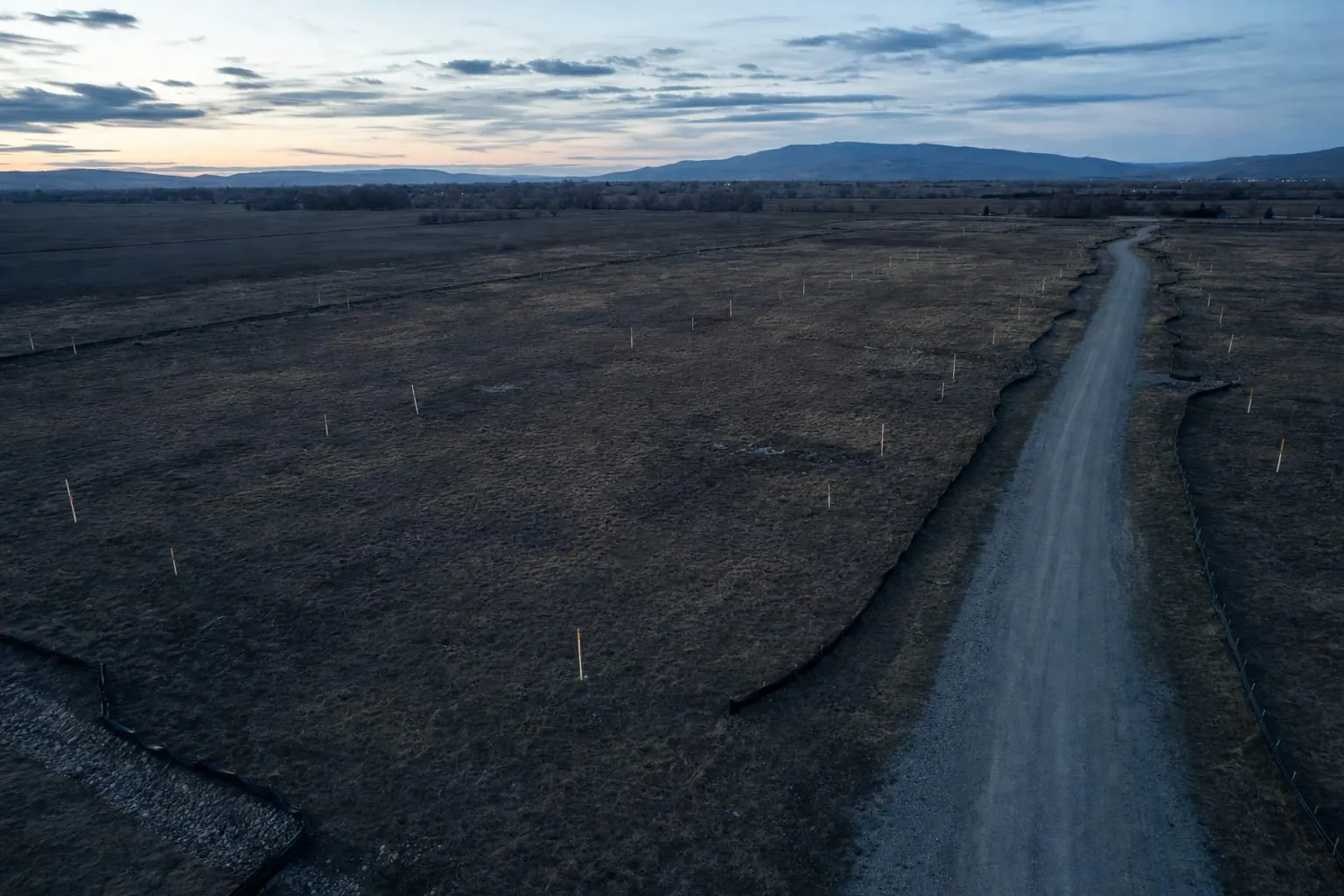
Photo: surveyed greenfield site
Show the reserved shares
| Project type | Share of annual visas reserved |
|---|---|
| Rural area projects | 20% |
| High-unemployment area projects | 10% |
| Infrastructure projects | 2% |
“Reserved” describes visa supply, not the outcome of any petition. A reserved visa is held for petitioners in that category, so the category has its own line. Visas not reserved are available to everyone else. A set-aside does not make a petition easier to approve, and it does not tell an investor when a visa will be available. Both depend on the individual case and on demand from the investor’s country of chargeability, which the timeline guide explains.
Processing
Priority processing for rural projects
Petitions for rural projects receive priority processing under the Act. USCIS says it prioritizes the processing of petitions for rural areas, and it describes how in the questions and answers page linked above.
Priority is about the order in which USCIS looks at petitions. It does not change the legal tests, shorten the evidence an investor must provide or promise a decision date. Current processing times for each form are on the USCIS processing times page, and this website does not restate them.
Determination
How a project’s status is determined
Status is established for each project, in writing, before any investor relies on it. In outline:
Photo: map table and documents

Show the four steps
- The project location is fixed. The determination looks at where the new commercial enterprise principally does business.
- An economist analyzes the data. The analysis applies the rural or high-unemployment definition to the site using maps, census counts and unemployment data, and records the sources and dates.
- The regional center documents the result. The regional center sponsoring the project files Form I-956F with USCIS, and the TEA analysis sits in that filing.
- The investor’s counsel confirms it fits the investor. Each investor files Form I-526E and counsel checks that the amount invested and the timing match the rules.
The result is a document trail, not a label. That is why a status is only as reliable as the analysis behind it, and why investors should read that analysis, not a summary of it. For the role of the sponsoring organization, see the regional center model.
Our approach
Why PacinfraX does not state a TEA status on this site
PacinfraX does not say on this website whether any site is rural, in a high-unemployment area or neither. The reasons are simple.
Where a project is offered, its status and the analysis supporting it would appear in the confidential offering documents, which eligible investors receive after the checks that securities law requires.
Show the three reasons
- Status needs a written analysis by an economist for a specific project, filed through a regional center. A statement on a web page cannot replace that.
- Rural and high-unemployment findings depend on data and map delineations that change.
- A statement without its analysis can lead a reader to a wrong conclusion about their investment amount or their visa path. The DHS proposed rule treats misleading statements about the visa process as a serious matter; the Federal Register, DHS proposed rule 2026-13392 (July 2, 2026) sets out the proposal.
Next step
Questions for your counsel
Use these questions with your own immigration counsel. They are general and do not replace advice on your facts.
Show the questions
- Which definition of the investment amount applies to me, and when is the amount fixed for my case?
- How will the economist show that the project qualifies as a rural area or a high-unemployment area, and which data and dates support that?
- What happens to my petition if a designation or a map delineation changes after I invest?
- Is the project one that could be treated as an infrastructure project, and what would that change?
- How do the set-asides and the priority processing apply to my country of chargeability and my filing date?
- Which documents in the offering package show the TEA analysis, and who prepared it?
- What does the regional center’s filing say about the project location, and how does it match what I am told?
Short answers
Frequently asked questions
Is a TEA the same as a rural area?
No. A rural area is one kind of TEA. The other kind is a high-unemployment area. Both allow the lower minimum investment amount, but they have different definitions and, for the visa set-asides, different shares.
Can an investor decide for themselves whether a site is rural?
An investor can read the definition and the maps, and doing so helps. The status that counts is the one documented by the project’s economist and regional center in the filing with USCIS, and the investor’s own counsel confirms how it applies.
Does a rural project mean a visa becomes available sooner?
Not necessarily. Rural petitions receive priority in processing, and a share of visas is reserved for them. Neither point is a promise about timing. Visa availability depends on demand from the investor’s country of chargeability.
Will the amounts change?
Under the Act, the amounts adjust automatically on January 1, 2027 and every five years after that. The amounts shown on this page were read from USCIS guidance on November 2, 2026. Check the current figures with USCIS and your counsel before you rely on any number.


Questions about targeted employment areas?
Register interest or write to [email protected]. We never ask for funds through this website or by message.