
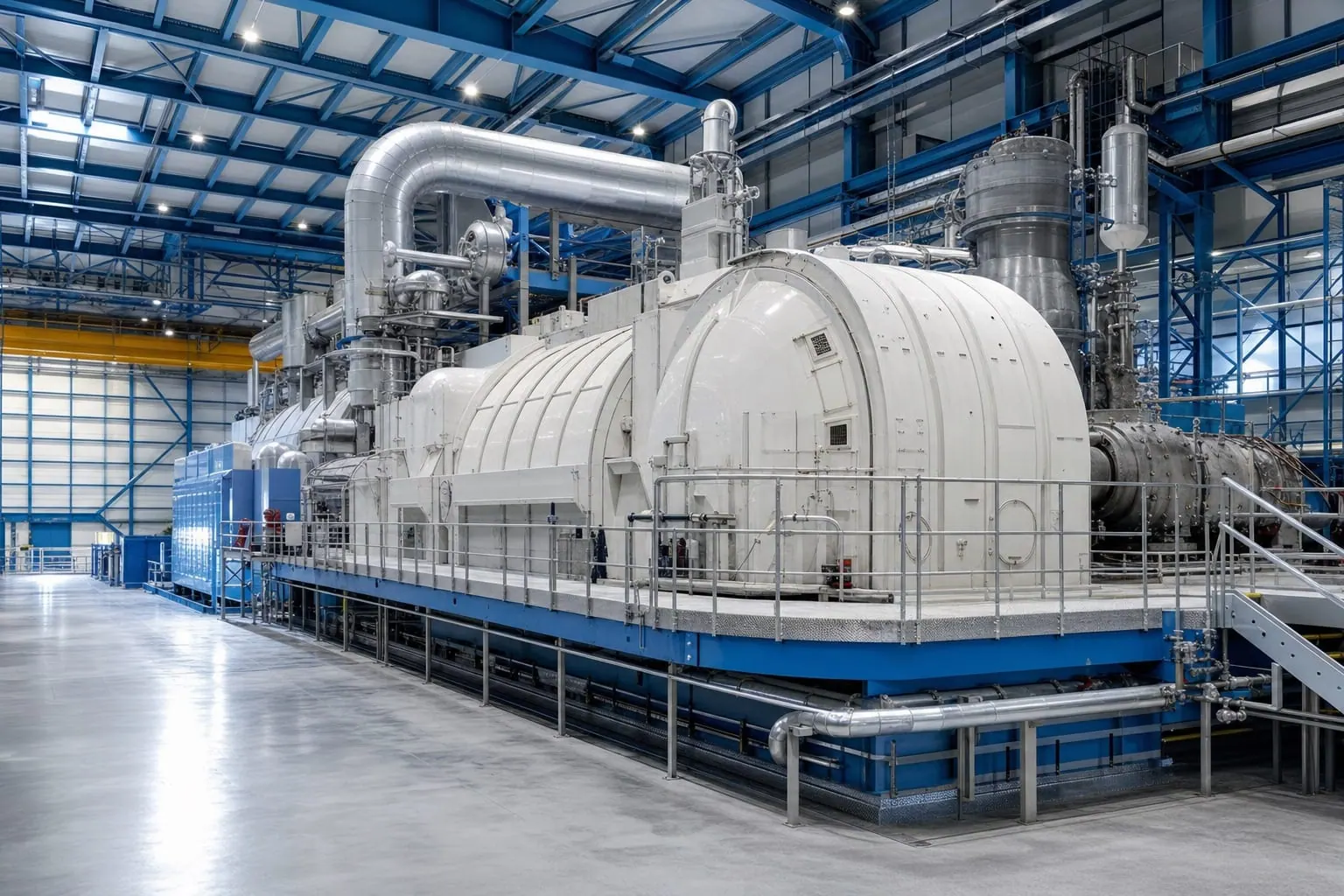
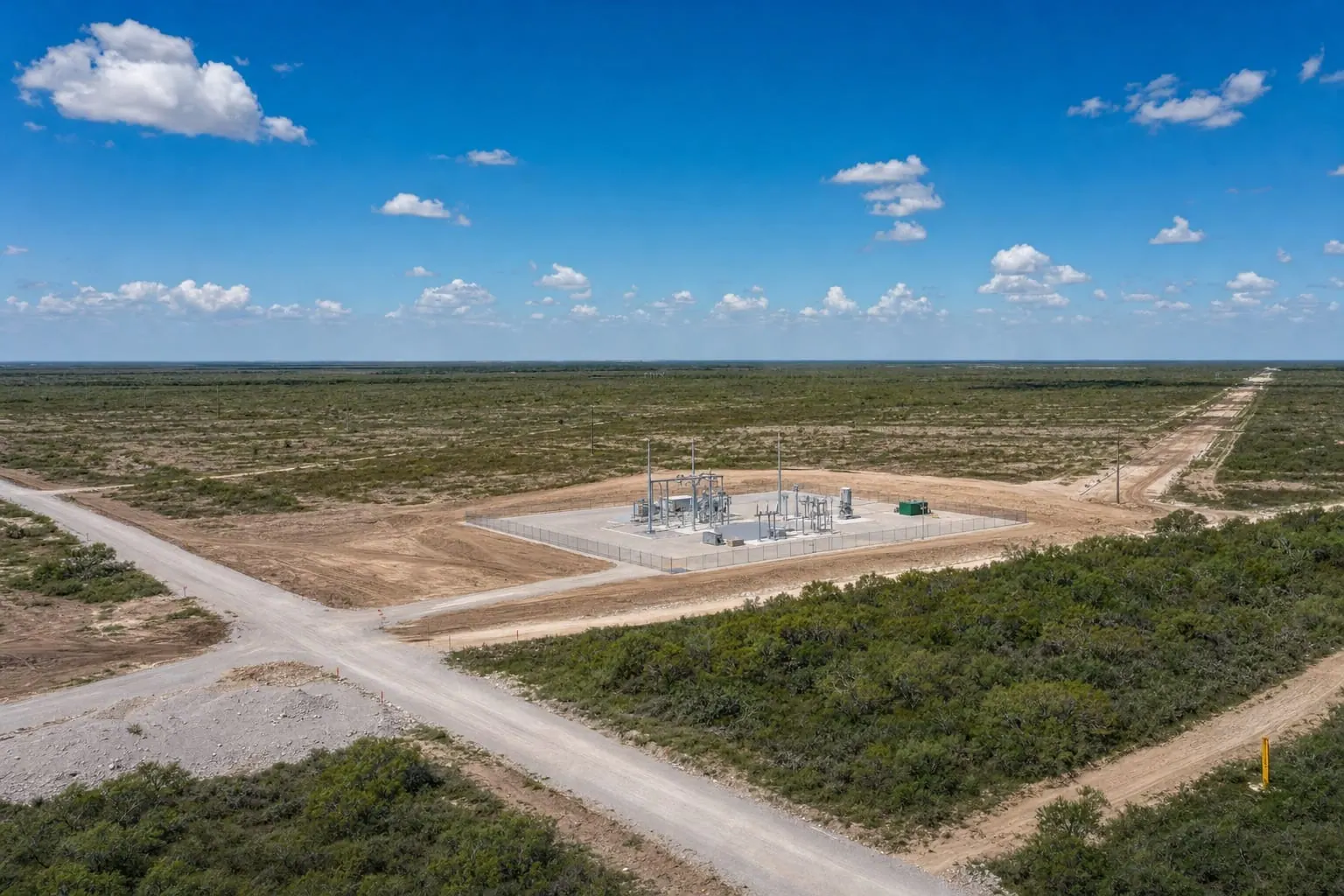
South ERCOT, Texas
An AI campus in development with on-site gas generation and storage, planned so halls energize without waiting on the interconnection queue.
Explore the Texas campus →Solutions · Power Infrastructure
PacinfraX energizes AI data centers with on-site natural gas generation, battery storage and a bridge to the grid. Your halls run on power built next to them, so capacity does not depend on the interconnection queue, and the utility connection follows when it is ready.
Updated
1,200MW
Planned in Vietnam
4
Site agreements in Vietnam
10–50MW
Hyperscale block size
3
Markets: Texas, Minnesota, Vietnam
Who it's for
Any AI deployment that cannot wait years for a grid connection benefits from power built on the campus. On-site generation gives you a date set by the campus schedule, not the utility's and a supply that the campus team operates for you.
Training campuses where the date power arrives sets the date the cluster starts.
New capacity that has to be sold before demand moves on.
Dedicated AI capacity with firm, on-site power.
Need the power and the building? See AI data centers.
The problem
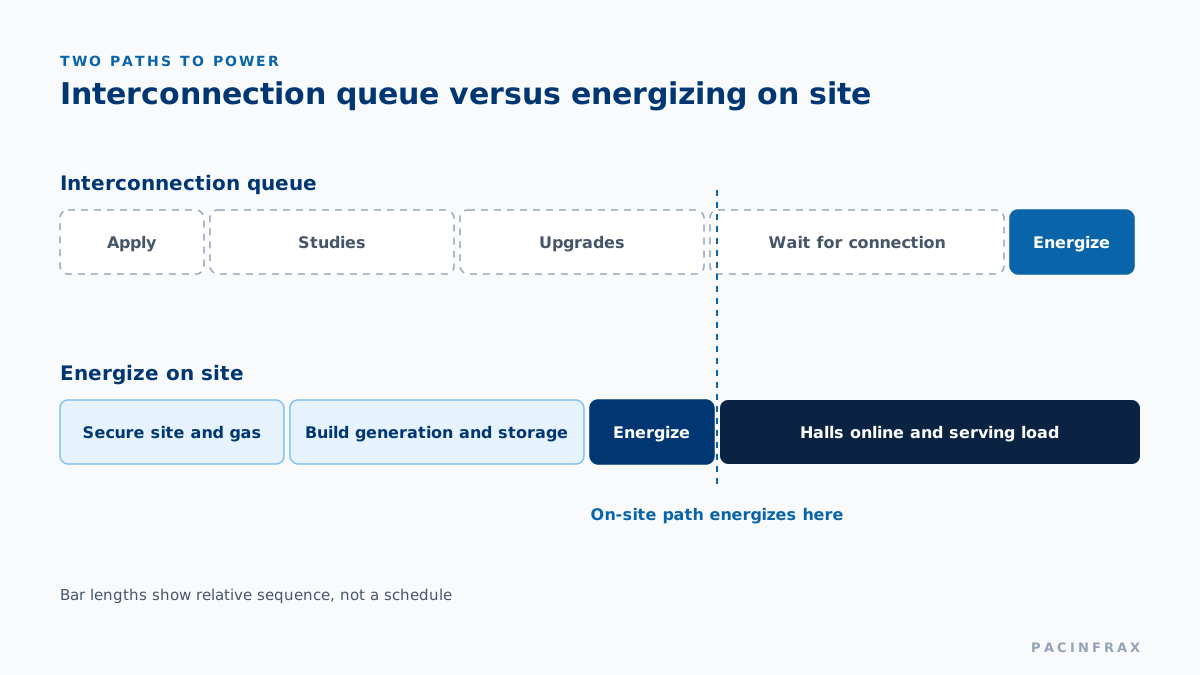
A grid interconnection request passes through studies, upgrades and construction by the utility. The sequence belongs to the utility, so your date depends on its work. On-site power changes who controls the sequence: generation, storage and halls are built on one site by one team.
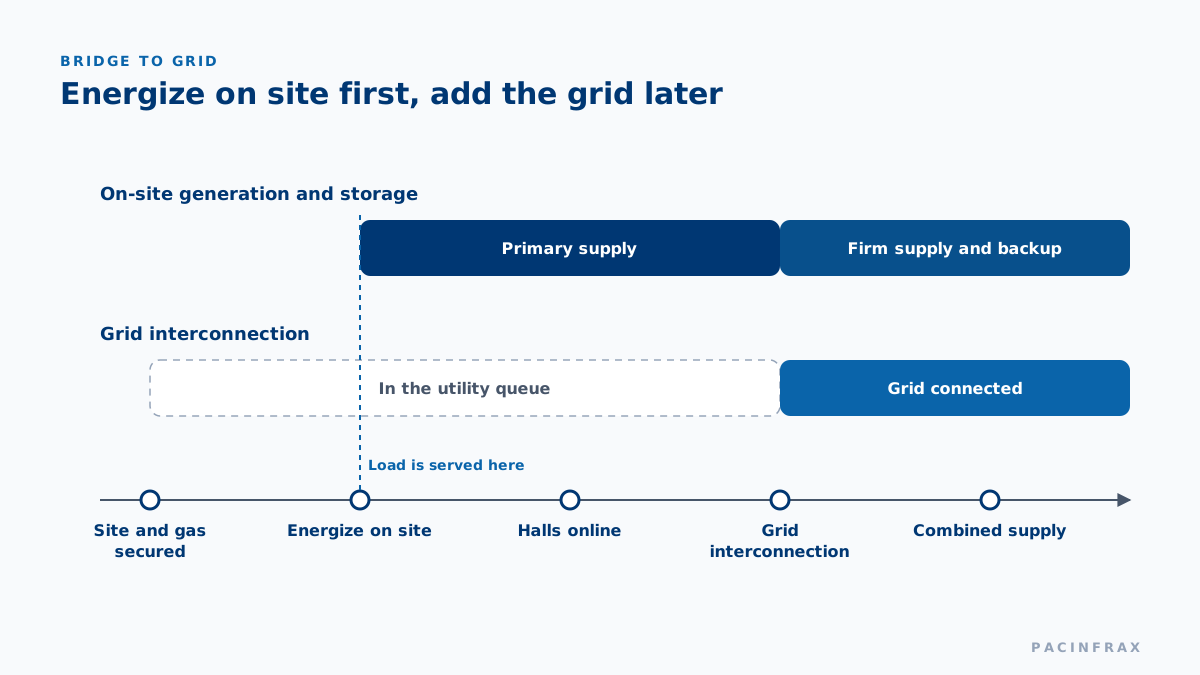
The diagram compares the two paths. On the queue path the data hall waits for the grid. On the on-site path the hall energizes from local generation, and the grid arrives later as a second source.
The model
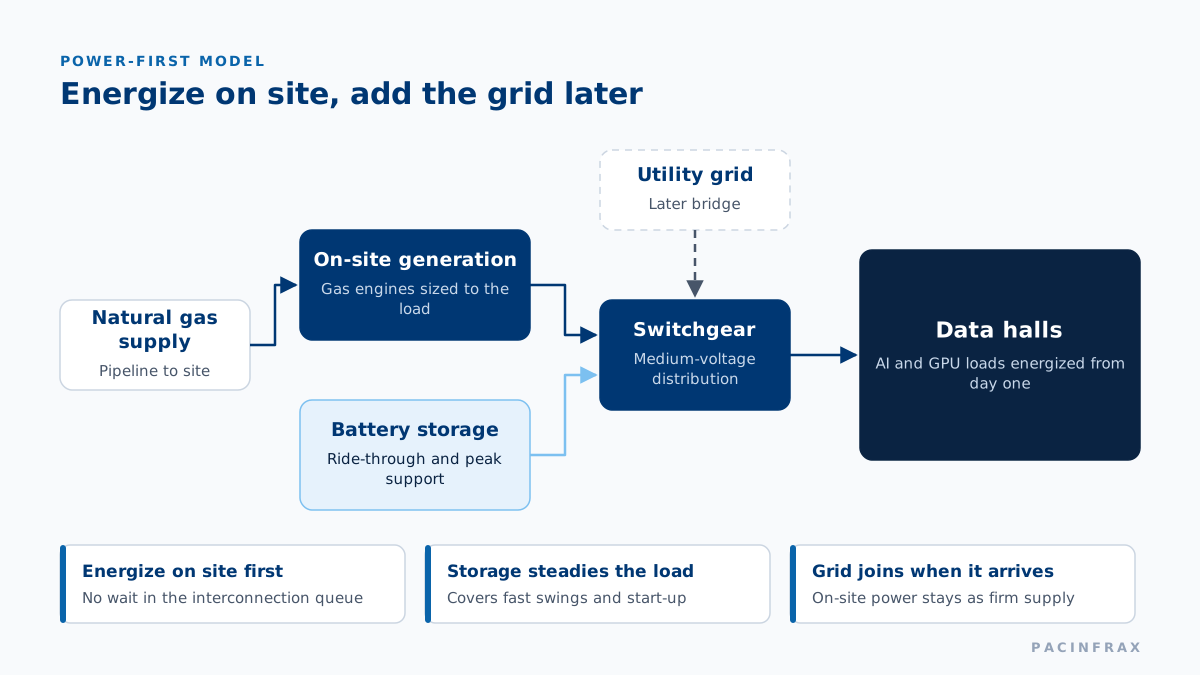
Our power model has three layers that work together. Generation supplies the energy. Storage handles the fast changes. The grid connection arrives as a bridge and later as a second source.
Natural gas reciprocating engines or turbines supply continuous power to the campus.
Batteries give ride-through, peak support and smoothing of fast AI load swings.
The utility interconnection is added later and joins the same switchgear.
How we deliver
Next
We size generation and storage to your megawatts, your ramp and your redundancy target.
Next
Gas supply, plant location, water and heat paths are set with the campus layout.
Next
Air and construction permits are prepared while long-lead equipment is ordered.
Next
Engines or turbines, switchgear and storage are built beside the data halls.
Next
Generation, storage and halls are tested together, then the first block is energized.
Next
The utility connection is added later without changing the supply your halls see.
Generation
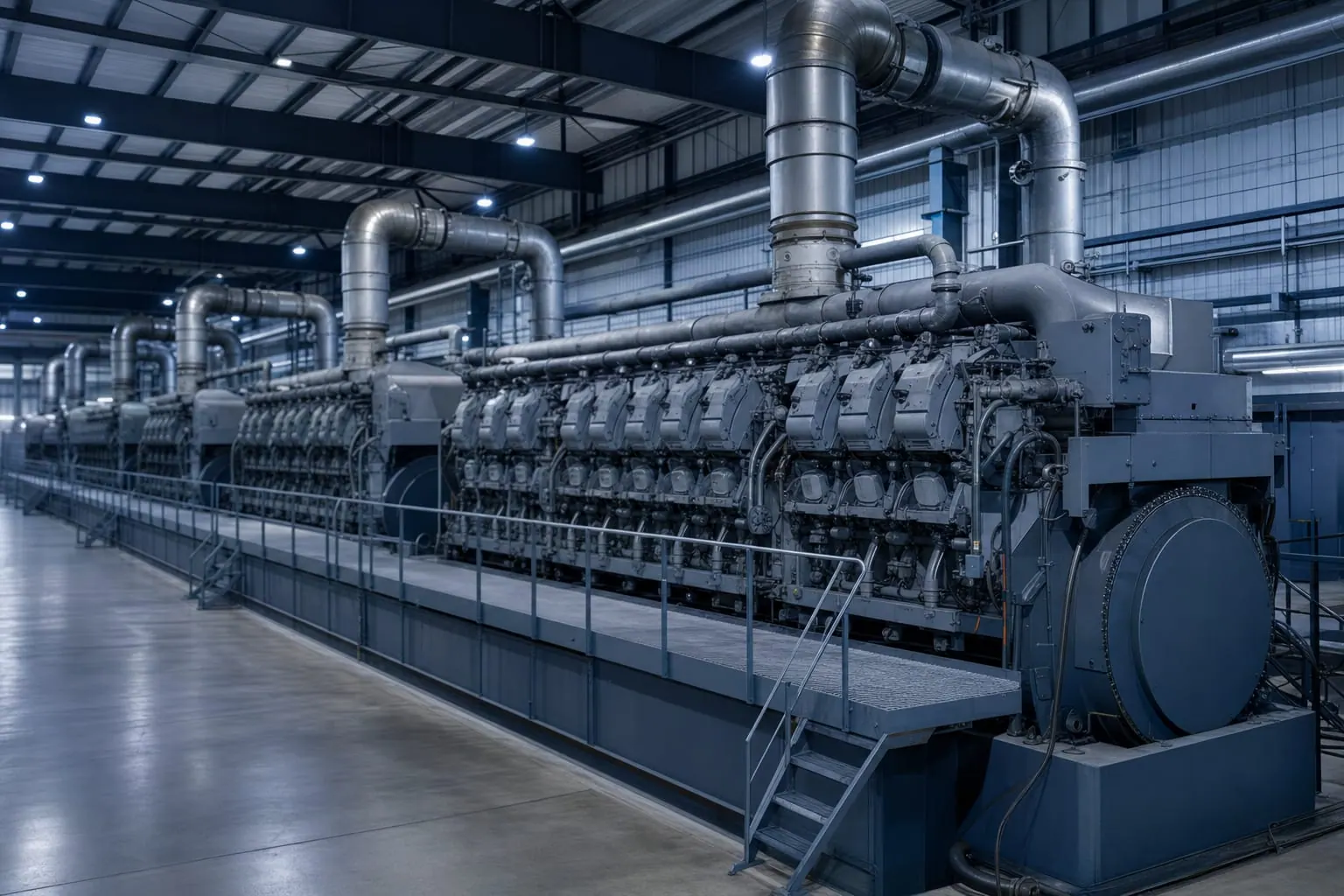
Natural gas engines and turbines are mature, widely supported machines with established fuel supply, maintenance and permitting practice. We select the prime mover for the campus: fast-start reciprocating engines suit modular growth, while turbines suit larger blocks.
Generation is arranged in redundant units, so one machine can be serviced while the others carry the load. Heat from the plant is a design input for the campus, and the switchgear sits between the plant and the halls.
Storage
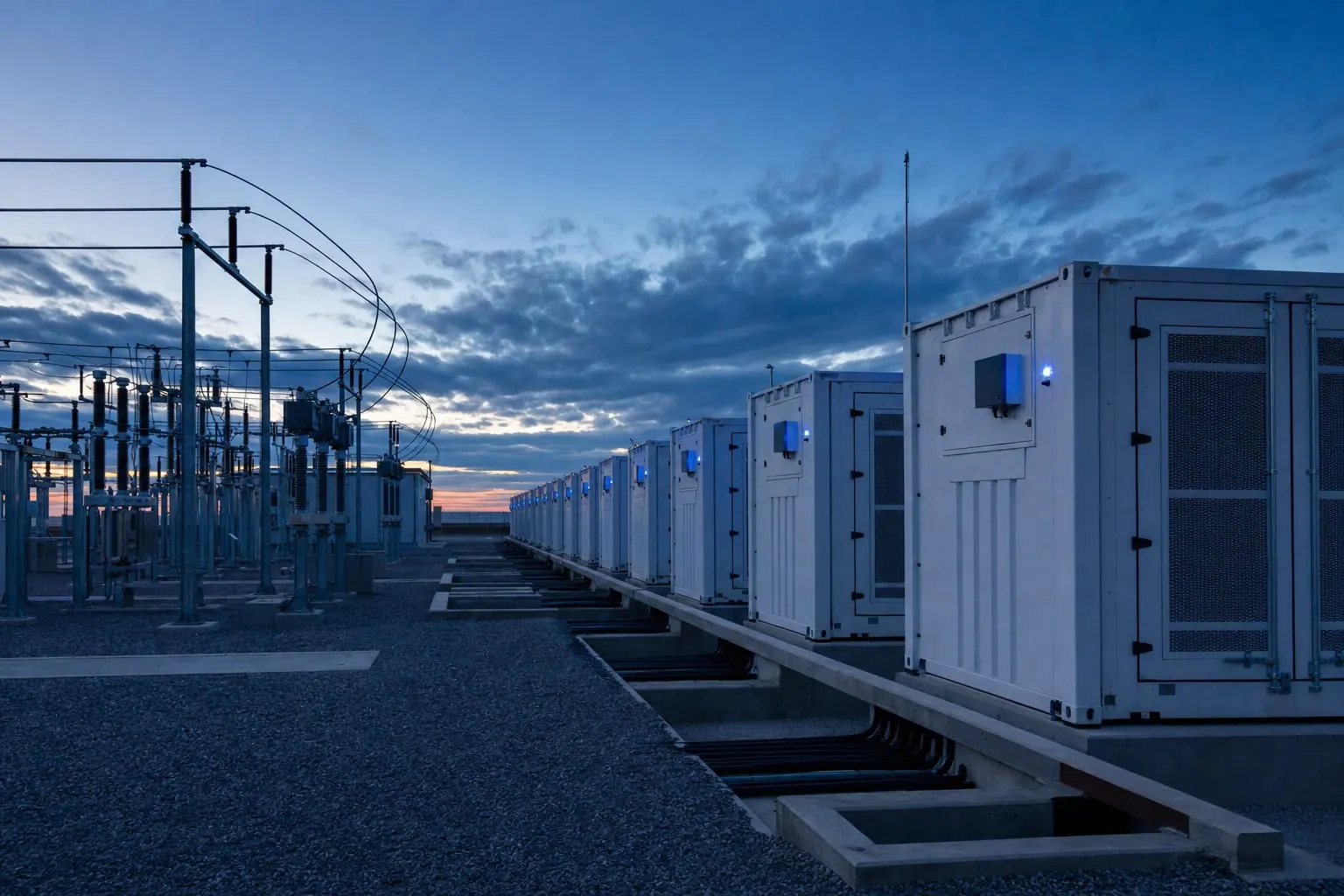
AI training loads swing quickly as thousands of GPUs start and stop together. Battery storage absorbs those swings, carries the halls through short disturbances and lets the generators run smoothly. Storage also supports peak demand, so the plant is sized for steady load rather than every spike.
Design basis
| Element | Design intent |
|---|---|
| Prime movers | Natural gas reciprocating engines or turbines in redundant units, sized to the campus block plan. |
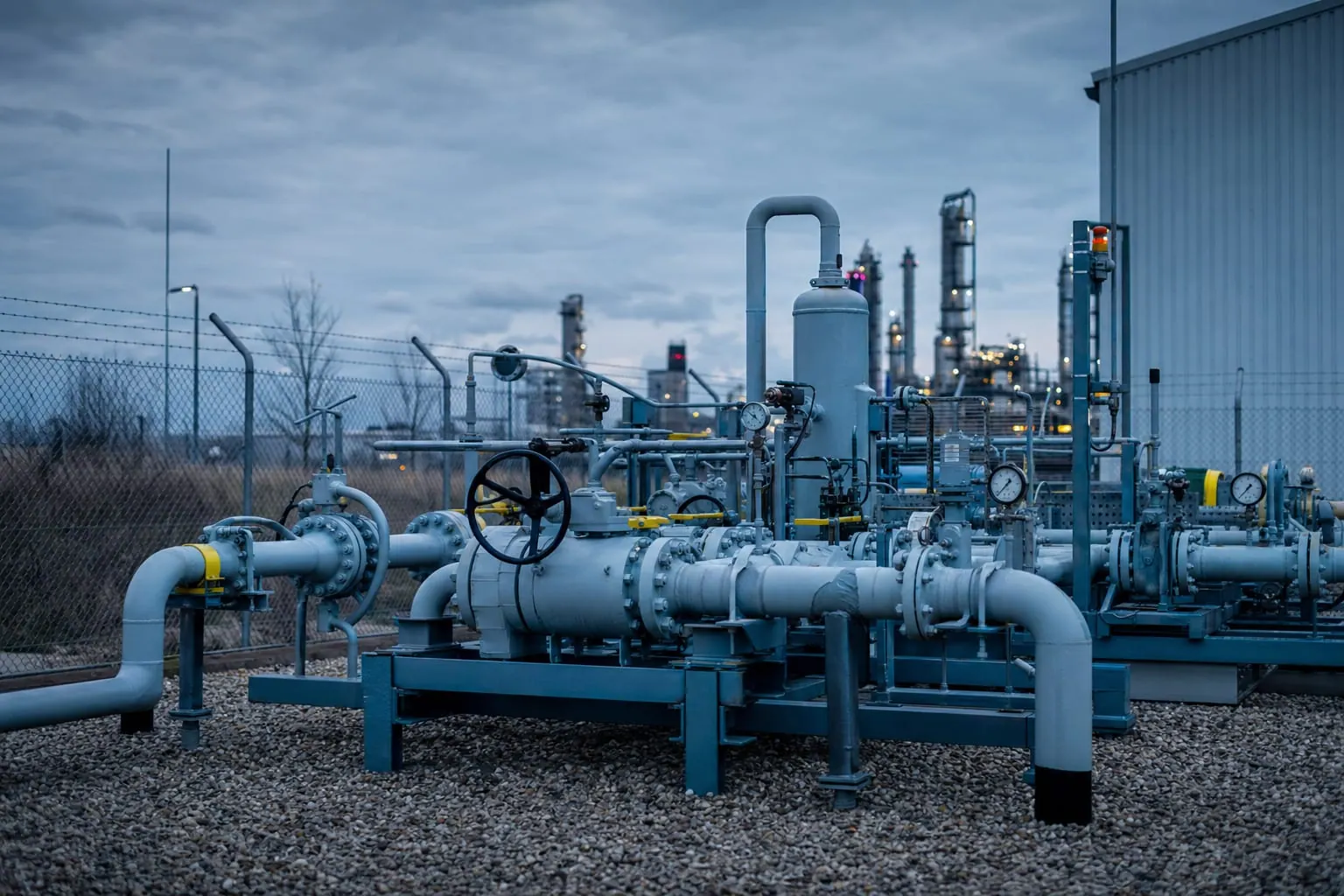
| Fuel | Pipeline gas supply with metering and a valve station at the campus boundary. |
| Storage | Battery energy storage for ride-through, peak support and smoothing. |
| Switchgear | Medium-voltage switchgear with transfer between generation, storage and the grid. |
| Redundancy | N+X set per hall and agreed at basis of design. |
| Controls | Campus control room with single-line diagrams, alarms and dispatch of generation and storage. |
| Grid | Interconnection added as a bridge that joins the same switchgear. |
Bridge to grid
The interconnection path continues in parallel. When the utility connection is ready, it joins the switchgear as another source. Your halls keep the same supply, and the campus gains a second path for resilience and for balancing cost.
Read the detail on bridge to grid.
Operations
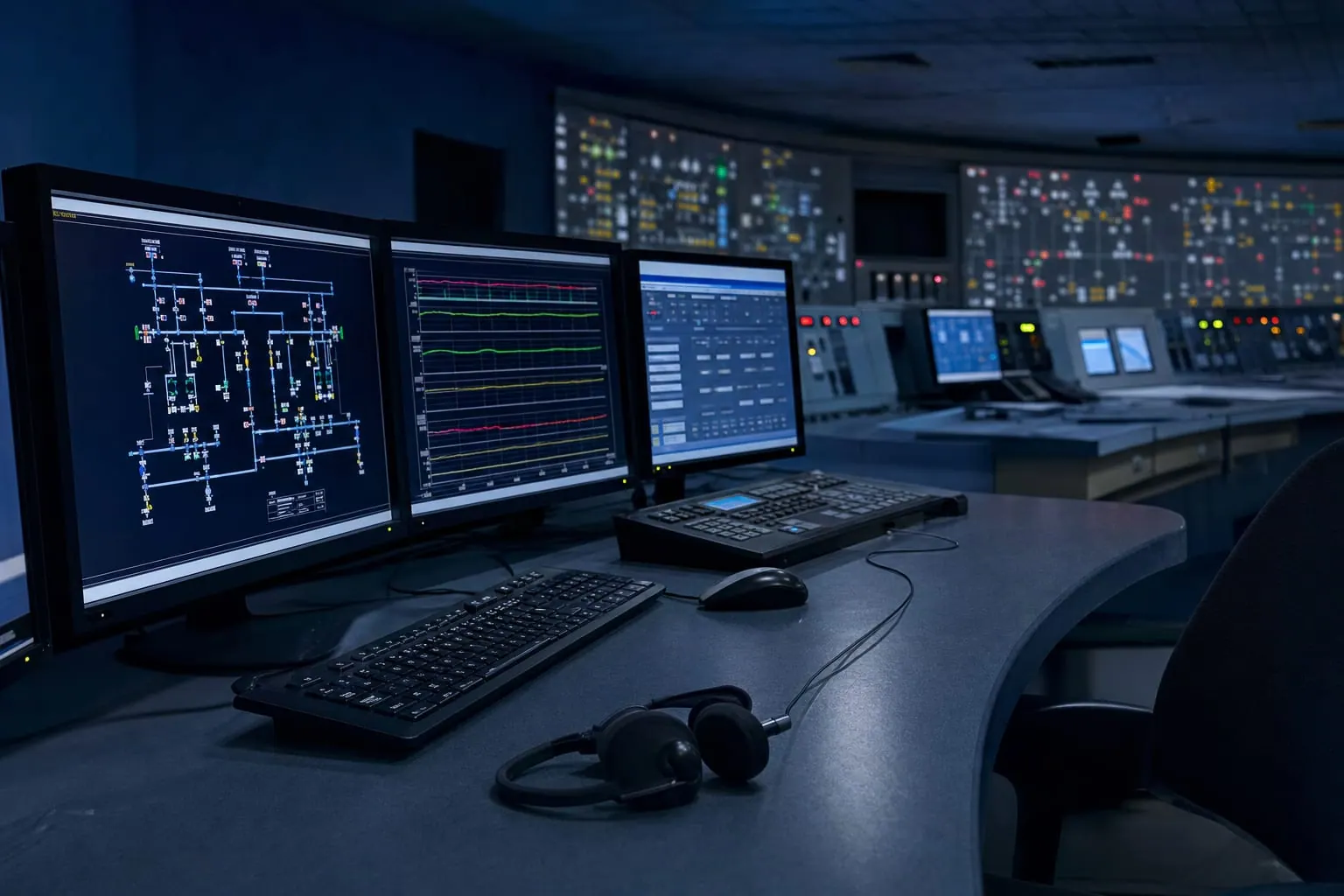
Operators watch generation, storage and switchgear from one control room. Single-line diagrams show every source and breaker, and alarms route to the right team. You see the same signals for your halls.
Permitting and safety
A power plant on a data center campus needs air permits, construction permits and a fuel supply agreement. We start that work with site selection, because the permitting path shapes where the plant sits and how it is arranged. Emission controls, stack design and monitoring follow the rules that apply to the site.
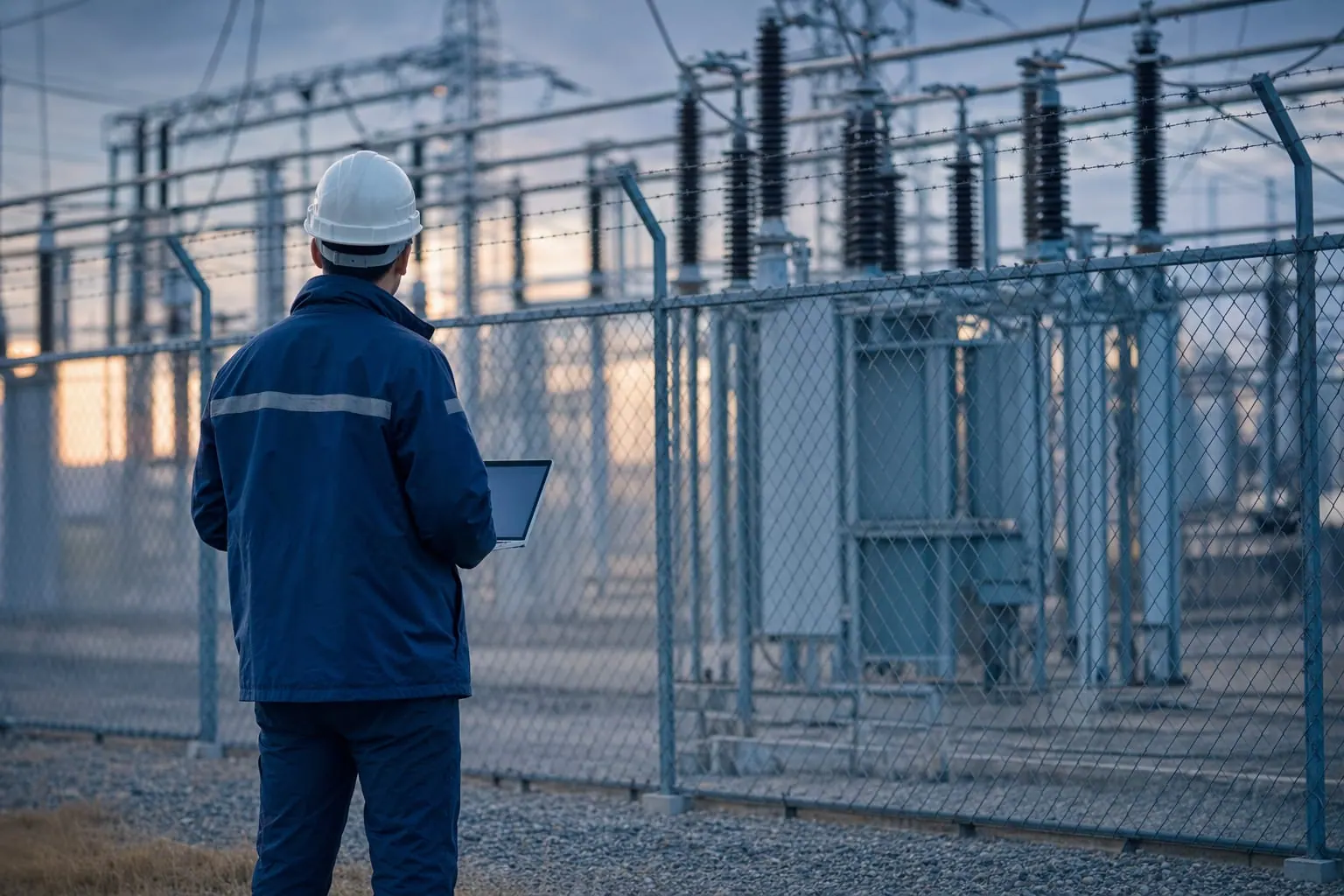
Safety is designed in, too. Gas equipment sits in its own zone with detection and shutdown, batteries sit in separated enclosures with monitoring, and the control room can isolate each source independently.
Where available
On-site power is planned into each campus from the first drawing.
An AI campus in development with on-site gas generation and storage, planned so halls energize without waiting on the interconnection queue.
Explore the Texas campus →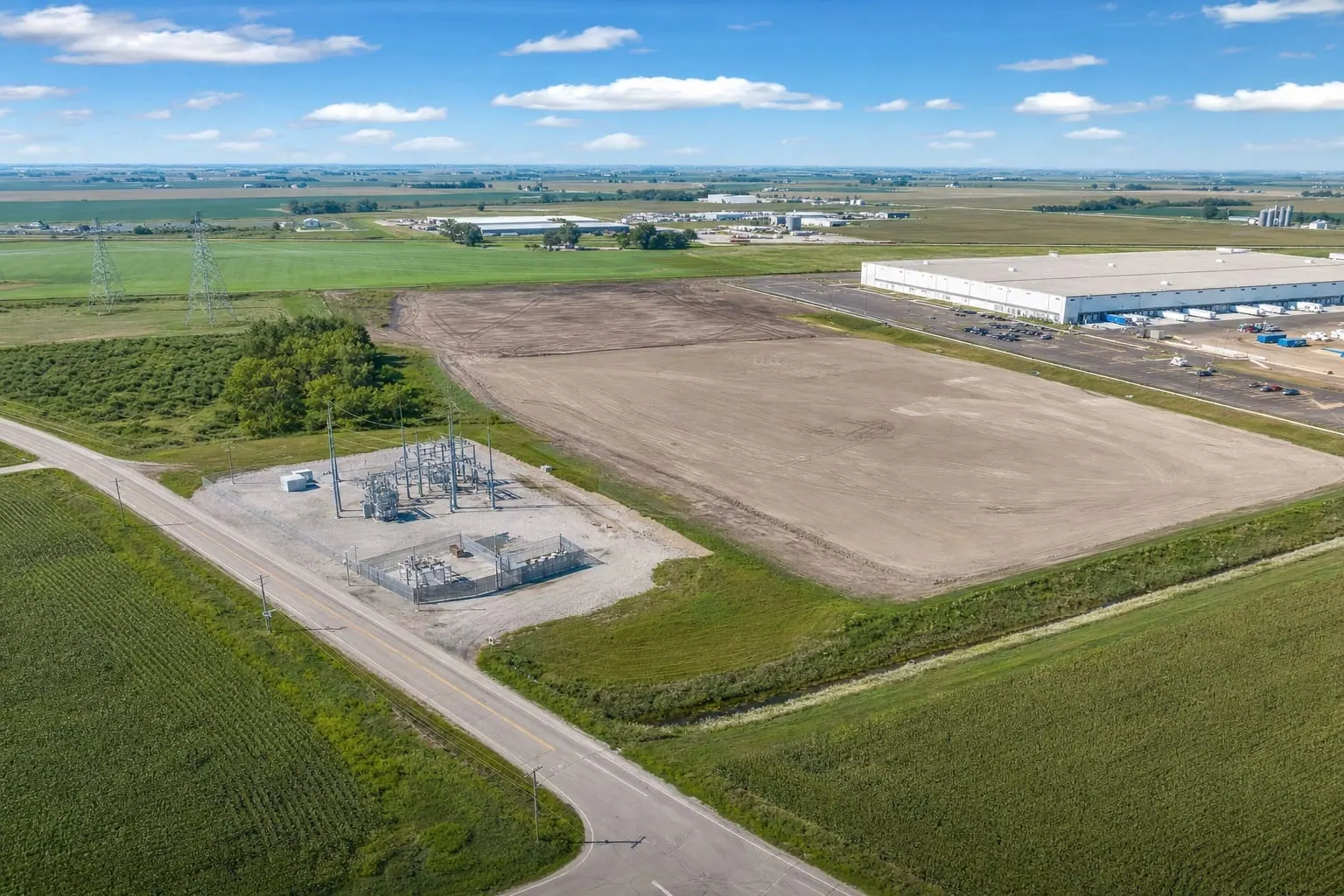
Minnesota, powered industrial site.
Explore the Minnesota site →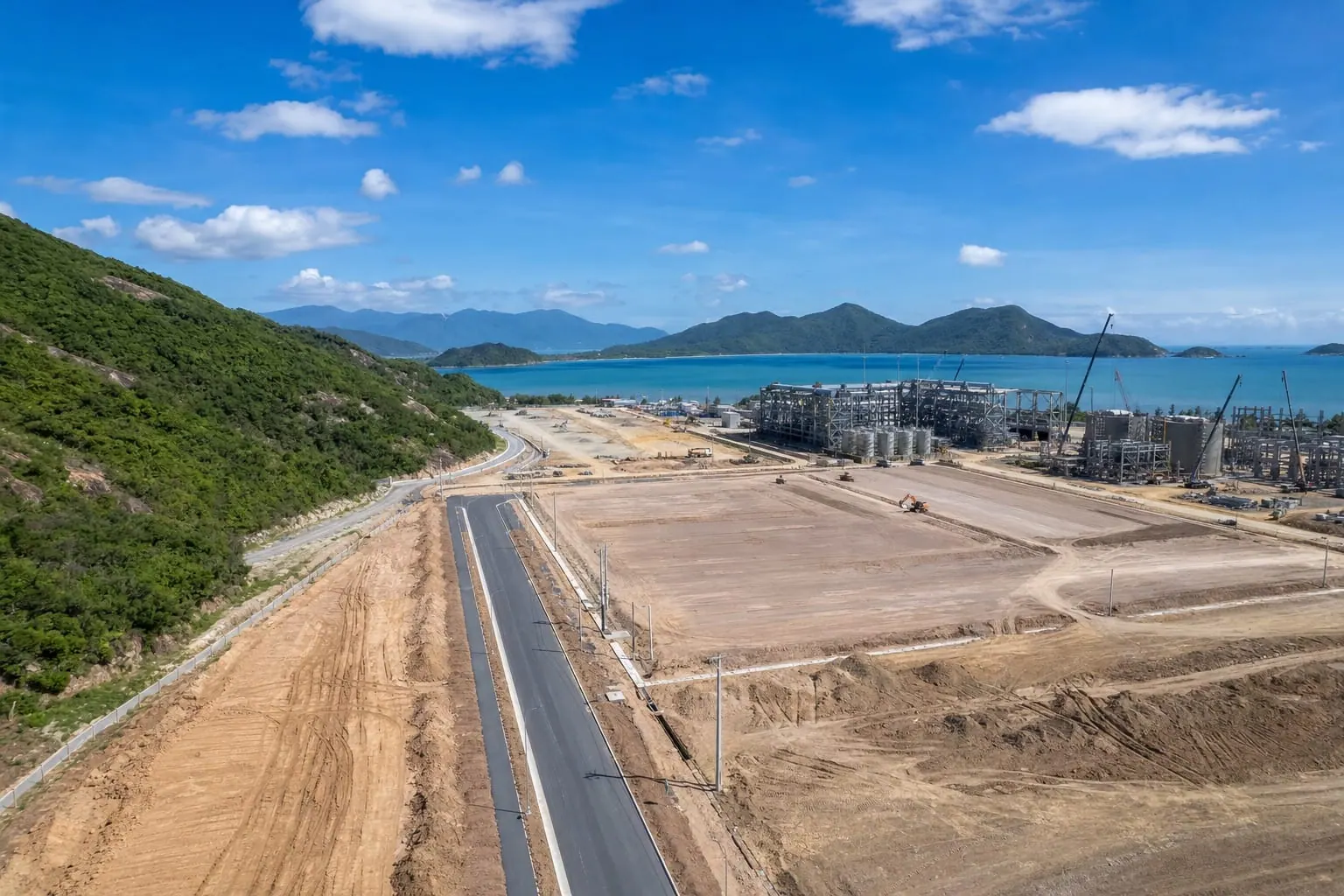
1,200 MW planned across four sites. Nam Thang Binh, Da Nang leads with 200 MW and a 20 MW phase 1 targeted for 2026–2027.
Explore Vietnam sites →FAQ
It is a power plant built beside the data halls, so the campus runs on its own supply instead of waiting for a grid connection.
The interconnection queue sets the utility's schedule. On-site generation puts the schedule in the hands of the campus team, so halls energize when the plant and halls are commissioned.
Natural gas, delivered by pipeline to the campus. Engines and turbines are proven machines with established supply and service.
It provides ride-through, supports peak demand and smooths the fast swings of GPU workloads so the generators can run steadily.
It joins the same switchgear as another source. Your halls see the same supply, and the campus gains a second path.
Redundancy is set per hall, usually as N+X, and agreed with your engineers at basis of design.
South ERCOT, Texas, with on-site gas generation and storage planned for the AI campus in development; Minnesota, powered industrial site; and Vietnam.
No. PacinfraX supplies power as part of data center capacity on its campuses.
Request capacity
Tell us how many megawatts you need, where and when. We come back with a site, a power plan and a delivery schedule.
Request capacity or write to [email protected].
One form, one team. Requests go through our contact page and reach the capacity team directly.
Request capacityPower-first AI capacity
Request capacityTalk to PacinfraX
We reply within two business days. WhatsApp and email work at any hour.