
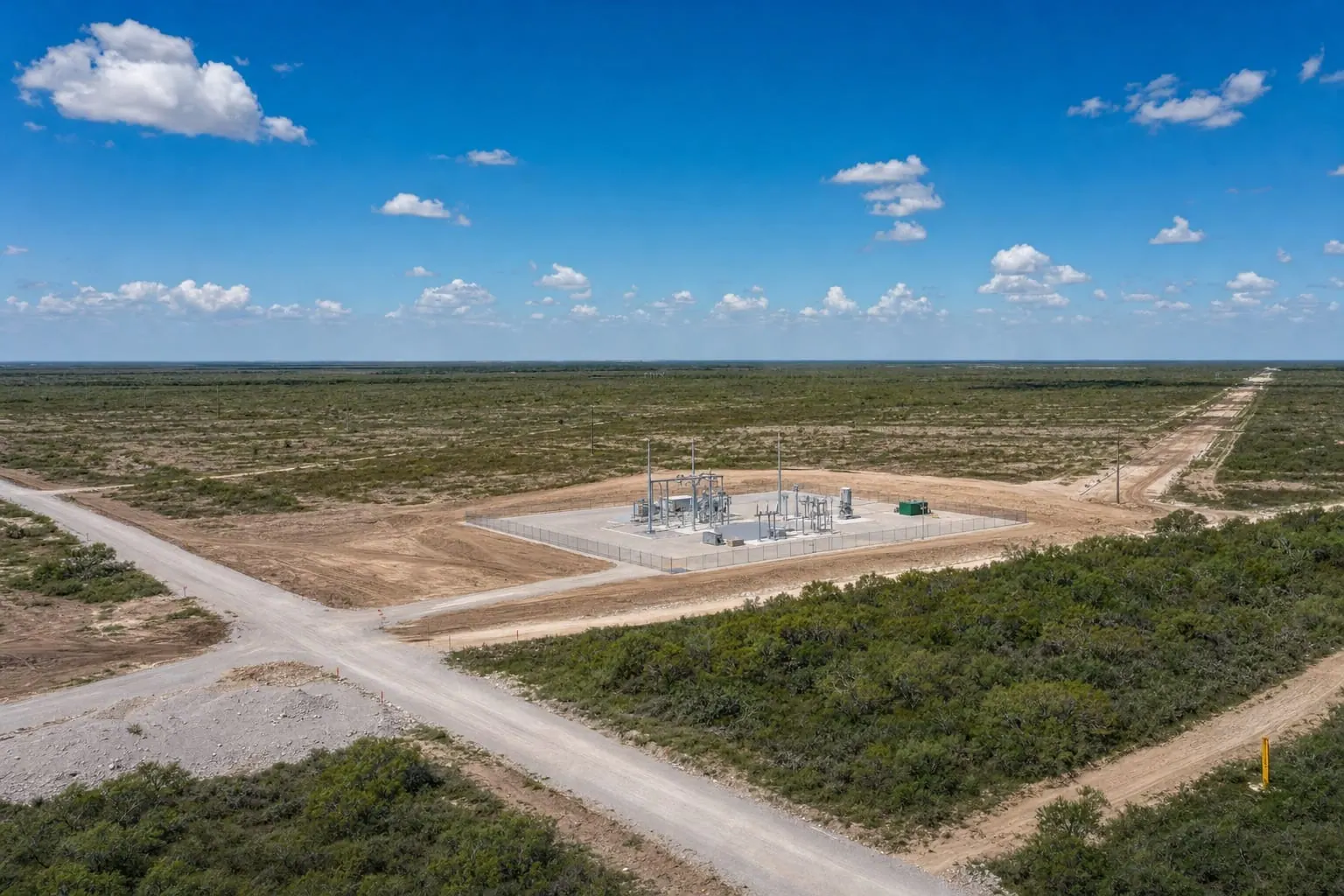
South ERCOT, Texas
An AI campus in development with on-site gas generation and storage, planned so halls energize without waiting on the interconnection queue.
Explore the Texas campus →Solutions · Power Infrastructure · Battery storage
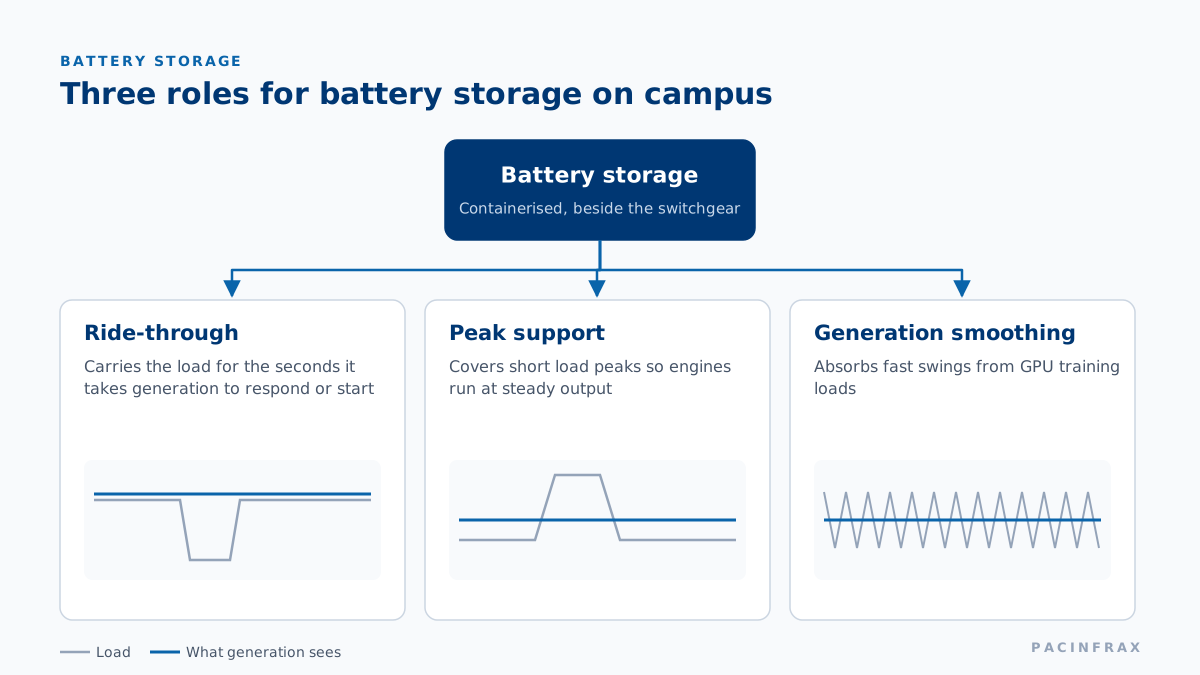
Battery storage keeps an AI data center steady. Batteries carry the halls through short disturbances, support peak demand and absorb the fast load swings of GPU clusters, so the generation plant runs smoothly. PacinfraX designs, builds and operates storage as part of the campus power plan.
Updated
1,200MW
Planned in Vietnam
4
Site agreements in Vietnam
10–50MW
Hyperscale block size
3
Markets: Texas, Minnesota, Vietnam
Who it's for
Any AI campus that runs on its own generation gains from storage. GPU clusters change load in moments, and a power plant prefers steady output. Storage sits between the two.
Large synchronous training jobs that start, stop and checkpoint together.
Mixed workloads whose load moves through the day and needs a steady supply.
Sites that want a smooth hand-off between on-site generation and the utility.
Part of the wider power model: power infrastructure.
Roles
Battery storage performs several jobs. The campus design assigns capacity to each one, and operators dispatch storage according to the duty at hand.
| Role | What it does | Benefit for the hall |
|---|---|---|
| Ride-through | Supplies the load for the seconds while a source trips or transfers | The cluster keeps running through a disturbance |
| Peak support | Adds power when load peaks above steady generation | The plant is sized for steady load, not every spike |
| Smoothing | Absorbs fast load swings from GPU workloads | Generators run steadily and wear less |
| Black-start support | Gives the plant a source to start from | The campus restarts in a planned sequence |
| Grid interface | Shapes exchange with the utility once the bridge is live | A stable interface when the grid joins |
How we deliver
Next
We list the jobs storage must do for your load: ride-through, peak support, smoothing and support at start-up.
Next
Storage is sized for how fast it must respond and for how long it must hold.
Next
Enclosure layout, separation, detection and suppression are set with the site and local rules.
Next
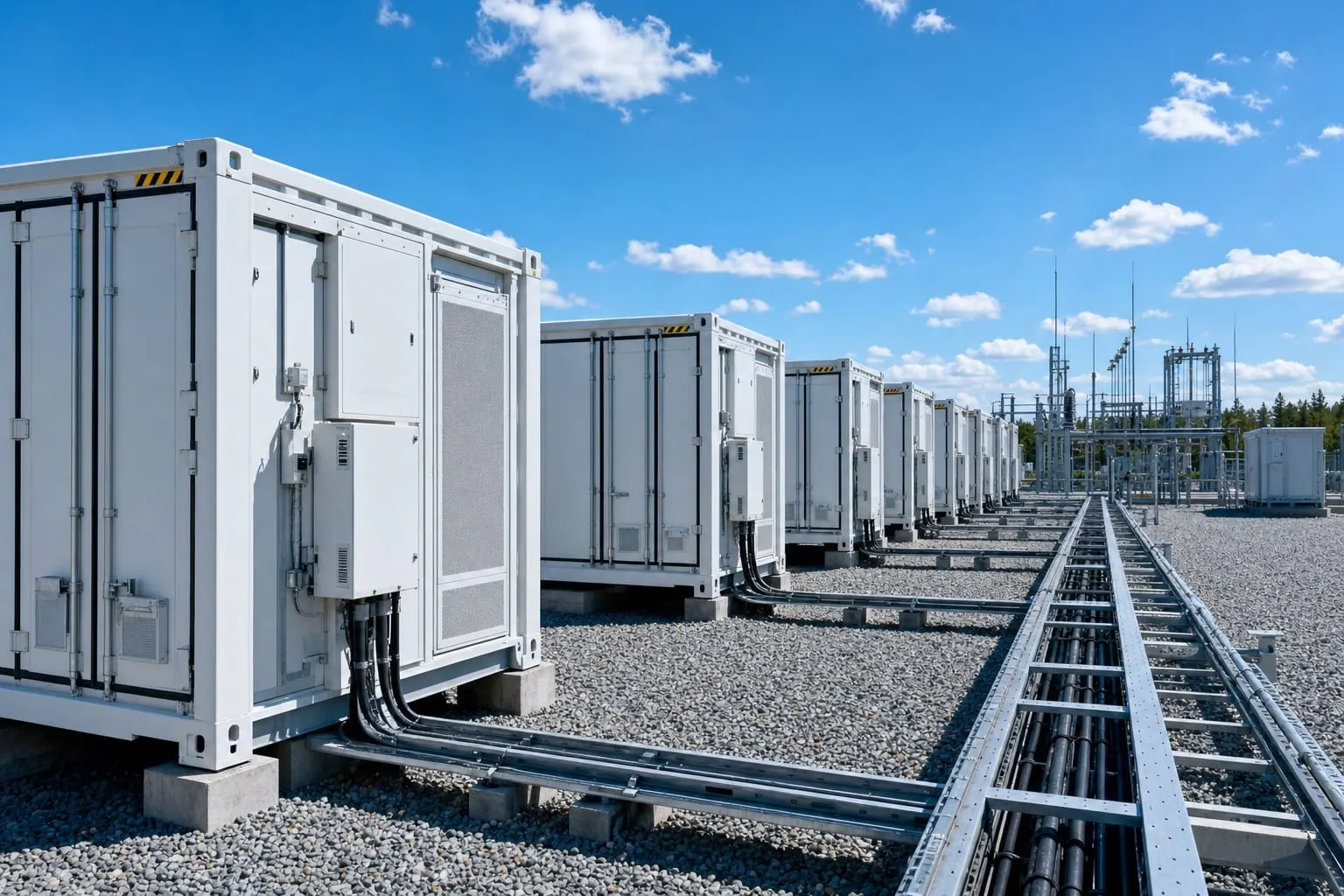
Battery containers and power conversion are installed next to the campus switchgear.
Next
Storage is tested alone, then together with generation and the halls.
Next
Operators dispatch storage and watch cell, rack and enclosure health continuously.
Design basis
Storage design starts with the duty and ends with an enclosure that can be installed safely beside live switchgear.
| Element | Design intent |
|---|---|
| Power rating | Sized to the largest step load and to the transfer time of the generation units. |
| Energy | Sized for the hold time each role needs. |
| Chemistry | A mature, widely supported battery chemistry selected for safety and service life. |
| Enclosures | Containerised units with separation, ventilation and monitoring. |
| Power conversion | Inverters and controls integrated with campus switchgear. |
| Controls | Dispatch from the campus control room, with local protection in each enclosure. |
Safety
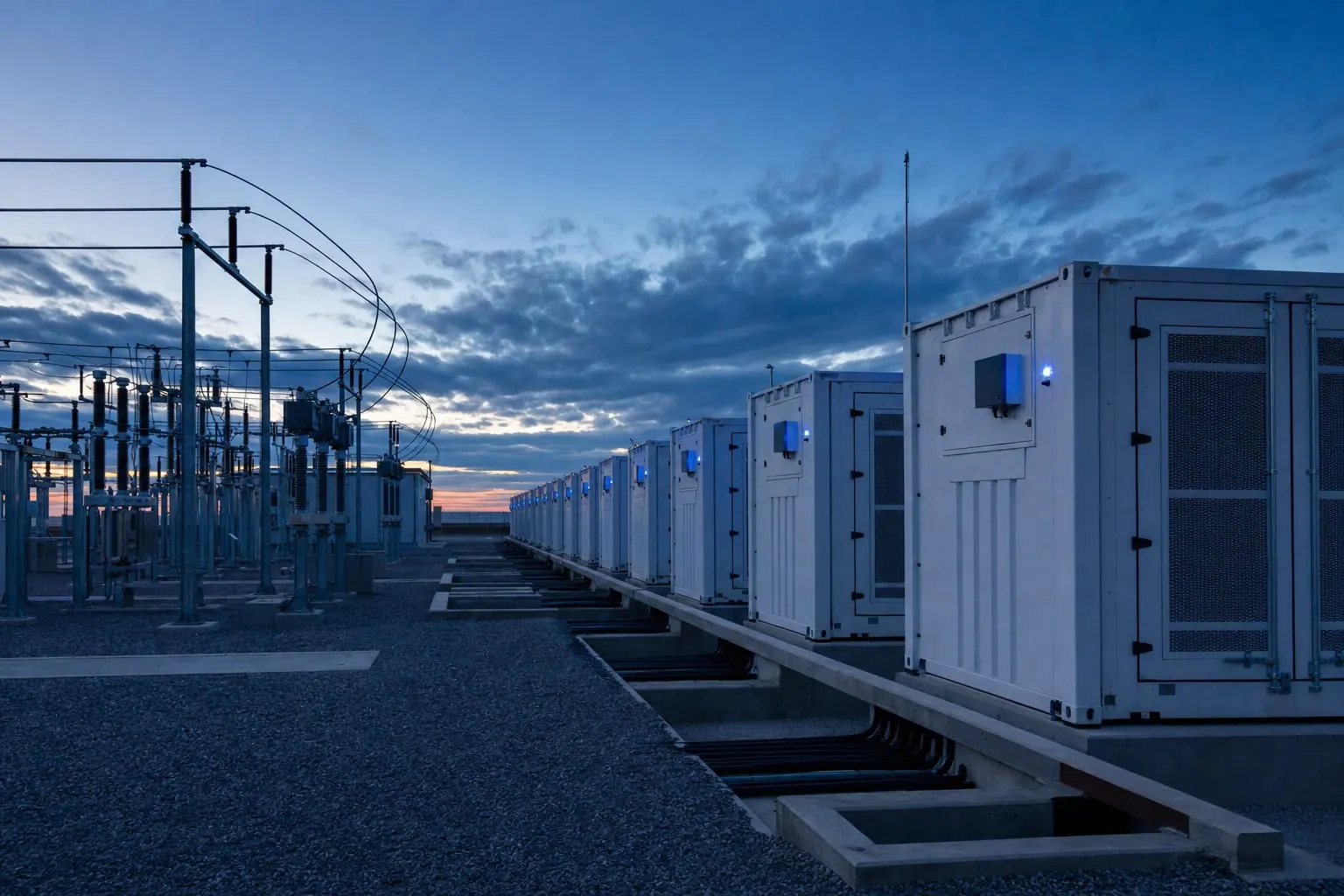
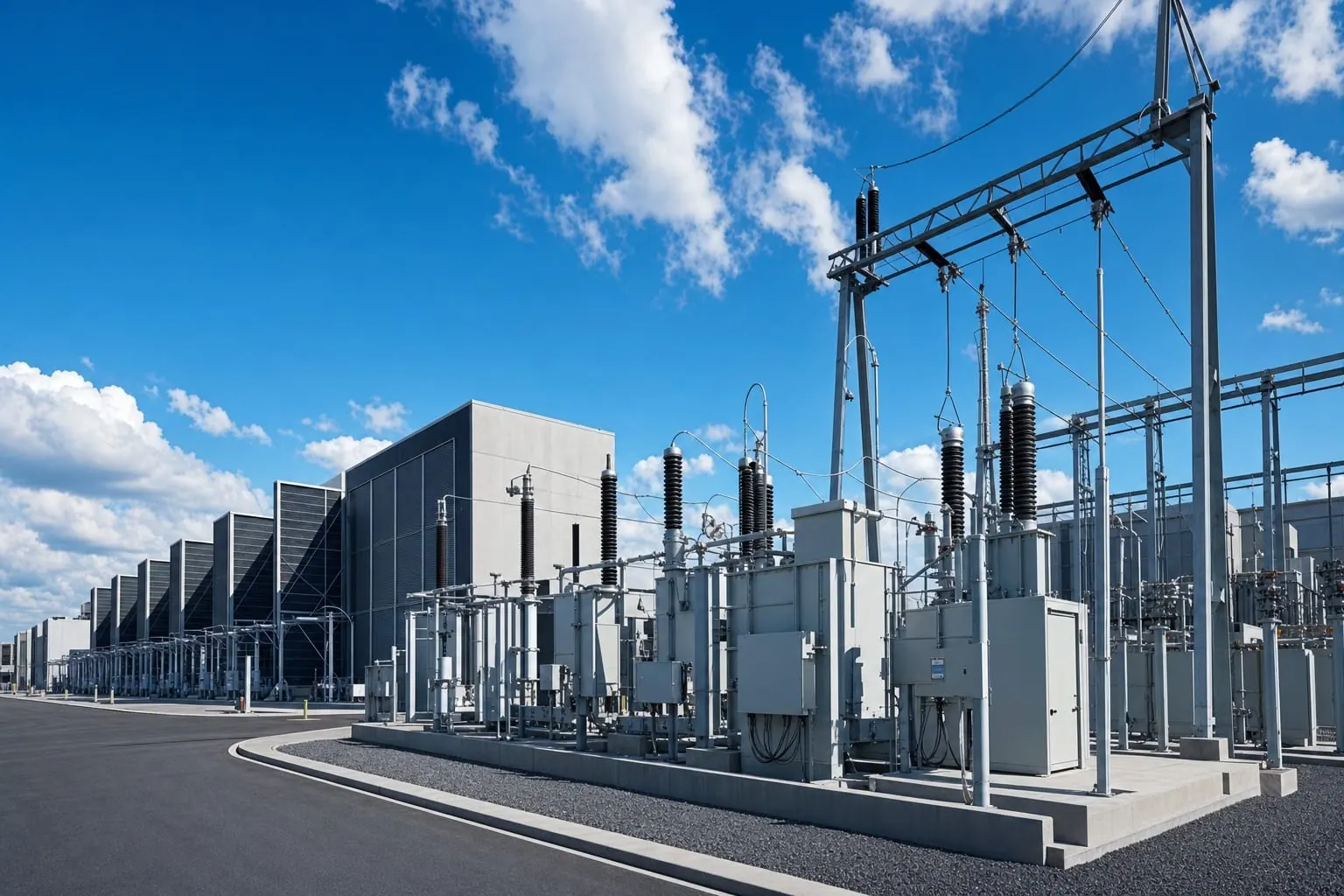
Batteries store a lot of energy, so safety is part of the layout. Enclosures sit apart from each other and from buildings, with spacing set by the fire strategy for the site. Monitoring tracks cell and rack conditions, and protection devices isolate a unit that drifts outside its limits.
We prepare the fire protection design and the emergency response plan with the local fire authority before construction, and we train campus staff on the procedures.
Operations
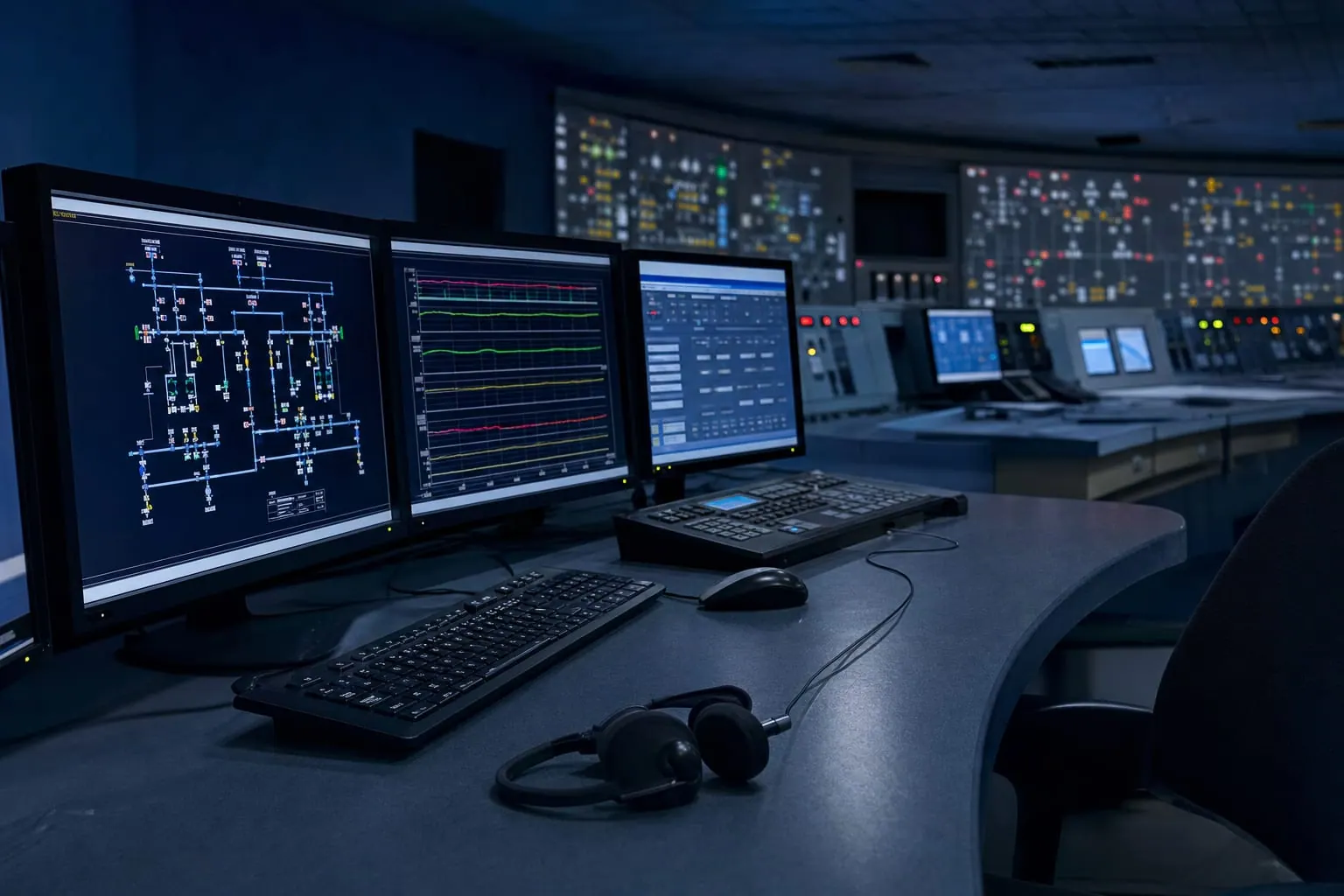
Operators see storage on the same screens as generation and switchgear. They set when batteries charge, when they discharge and how much capacity stays in reserve for ride-through. Alarms route to the campus team, and your operations staff can receive the signals that matter for your hall.
Sizing
Sizing begins with your load profile. We ask how fast your racks ramp, how large the synchronized steps are and how long a disturbance the halls must ride through. Those answers set the power rating and the energy of the system.
Then we test the size against the generation plant. The goal is a combination where engines or turbines run at an efficient point, storage covers the fast edges and the switchgear keeps every hall inside its limits.
Lifecycle
Batteries age with use, so we plan their lifecycle at the start. Monitoring tracks capacity over time, maintenance windows are scheduled around your workloads, and modules can be replaced in sections without taking the whole system offline.
Pairing
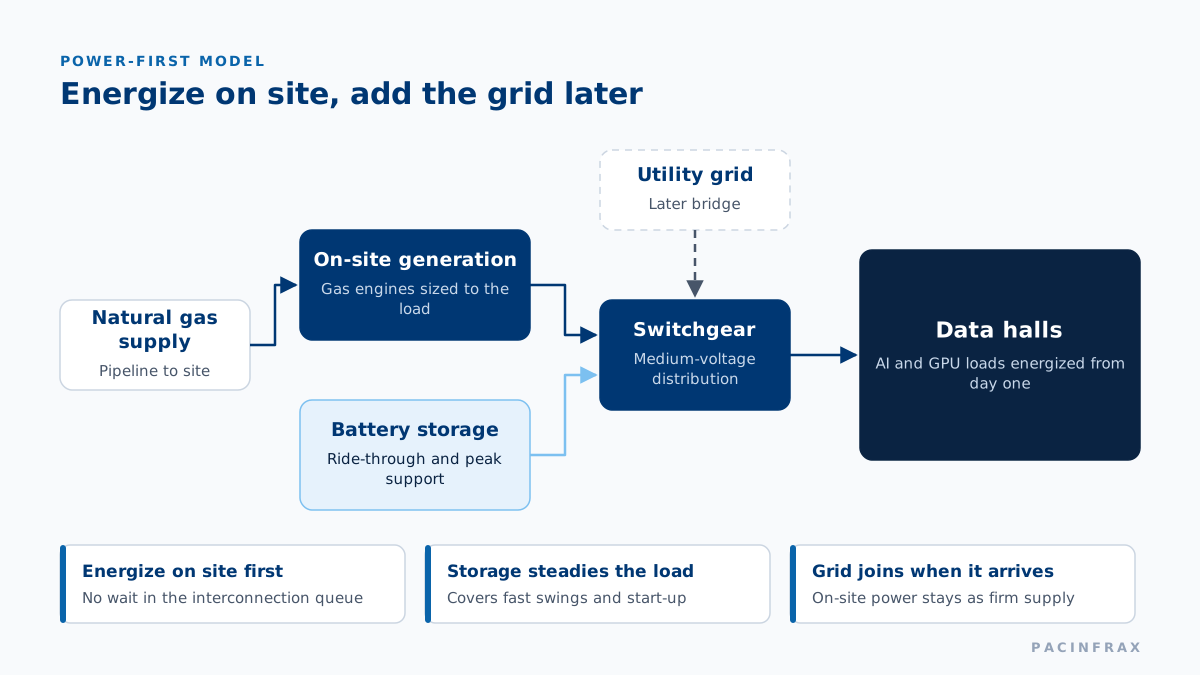
Storage is one of three layers in the PacinfraX power model. It works with the natural gas plant described on on-site generation, and it helps smooth the hand-over when the utility connection arrives through bridge to grid.
Where available
South ERCOT, Texas is planned with on-site gas generation and storage.
An AI campus in development with on-site gas generation and storage, planned so halls energize without waiting on the interconnection queue.
Explore the Texas campus →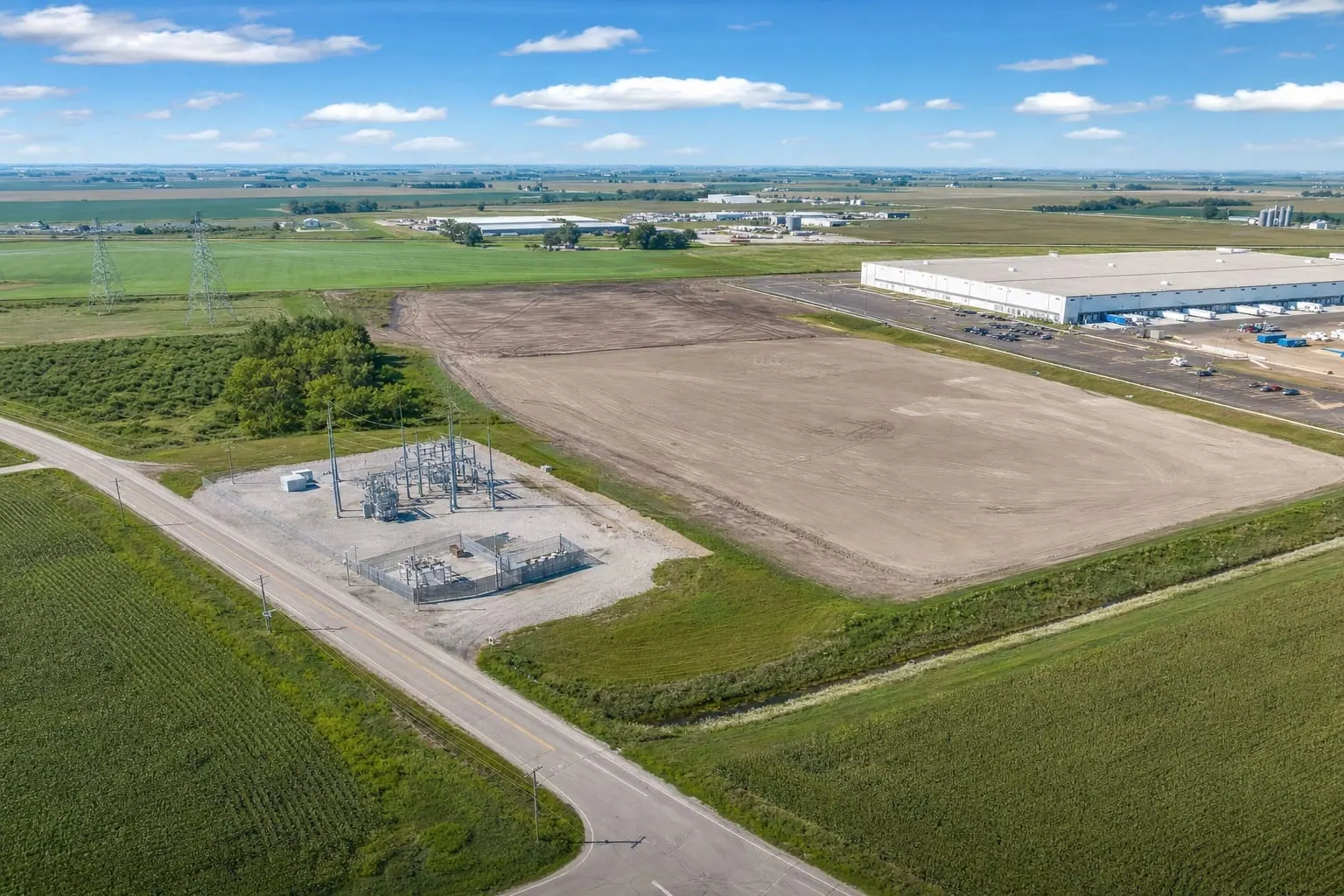
Minnesota, powered industrial site.
Explore the Minnesota site →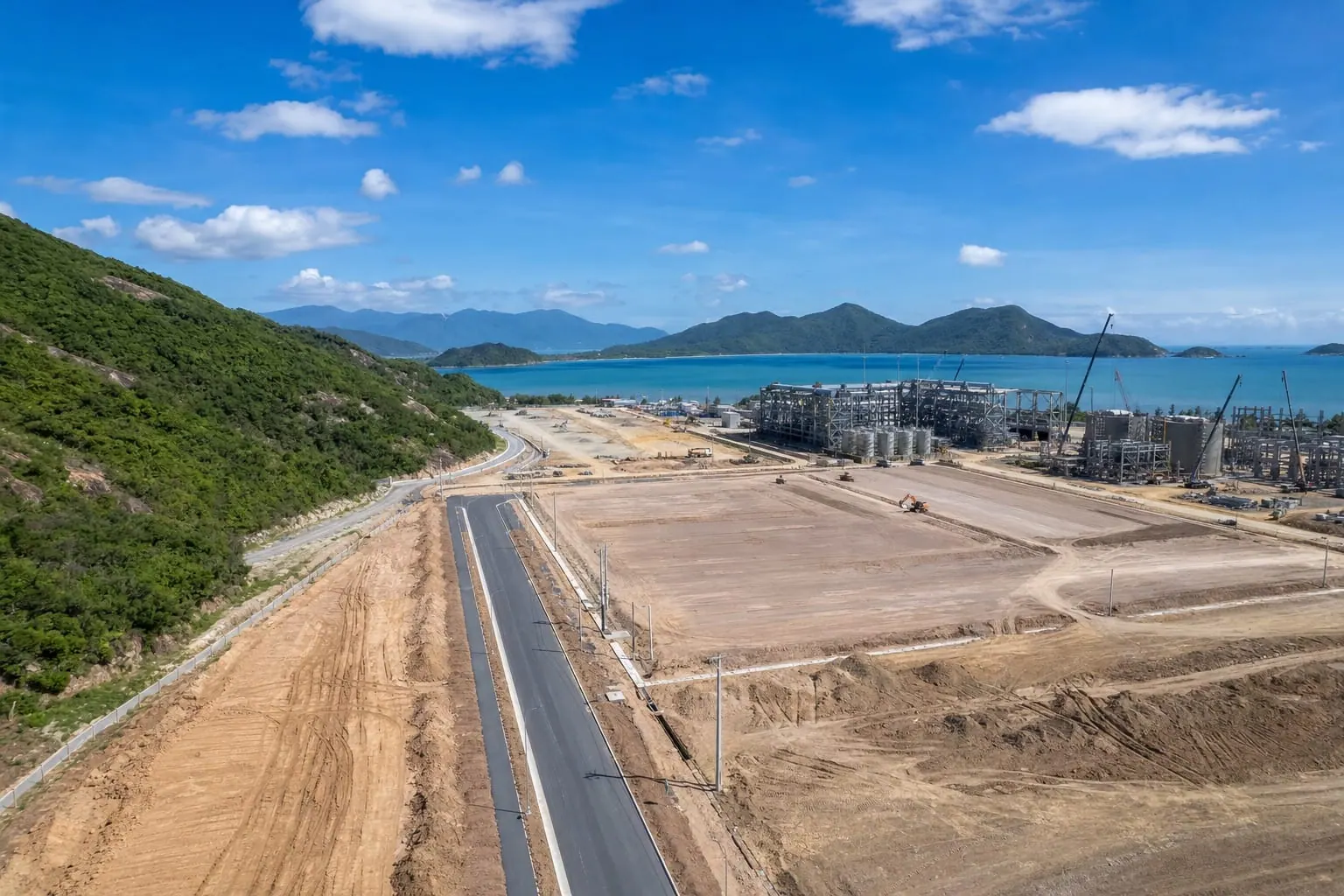
1,200 MW planned across four sites. Nam Thang Binh, Da Nang leads with 200 MW and a 20 MW phase 1 targeted for 2026–2027.
Explore Vietnam sites →Next step
Share your megawatts, the type of workload and the date you need power. We reply with a storage concept sized to your duty. See also AI data centers and why power-first delivery works.
FAQ
GPU clusters change load in moments. Storage absorbs the swings, rides through disturbances and lets the generators run steadily.
Ride-through is the short period when batteries supply the halls while a source trips or transfers, so the cluster keeps running.
No. Storage covers short duties and smooths the load. Generation supplies the continuous energy for the campus.
Safety is designed in: separated enclosures, monitoring, automatic isolation and a fire strategy agreed with local responders before energization.
Yes. Storage can give the plant a source to start from, so the campus restarts in a planned sequence.
Storage helps smooth the exchange with the utility and gives the campus a stable interface when the bridge goes live.
The campus control room team dispatches and monitors storage, and shares relevant signals with your operations staff.
South ERCOT, Texas, where storage is planned alongside on-site gas generation; Minnesota, powered industrial site; and Vietnam.
Request capacity
Tell us how many megawatts you need, where and when. We come back with a power plan that includes generation, storage and the grid bridge.
Request capacity or write to [email protected].
One form, one team. Requests go through our contact page and reach the capacity team directly.
Request capacityPower-first AI capacity
Request capacityTalk to PacinfraX
We reply within two business days. WhatsApp and email work at any hour.