
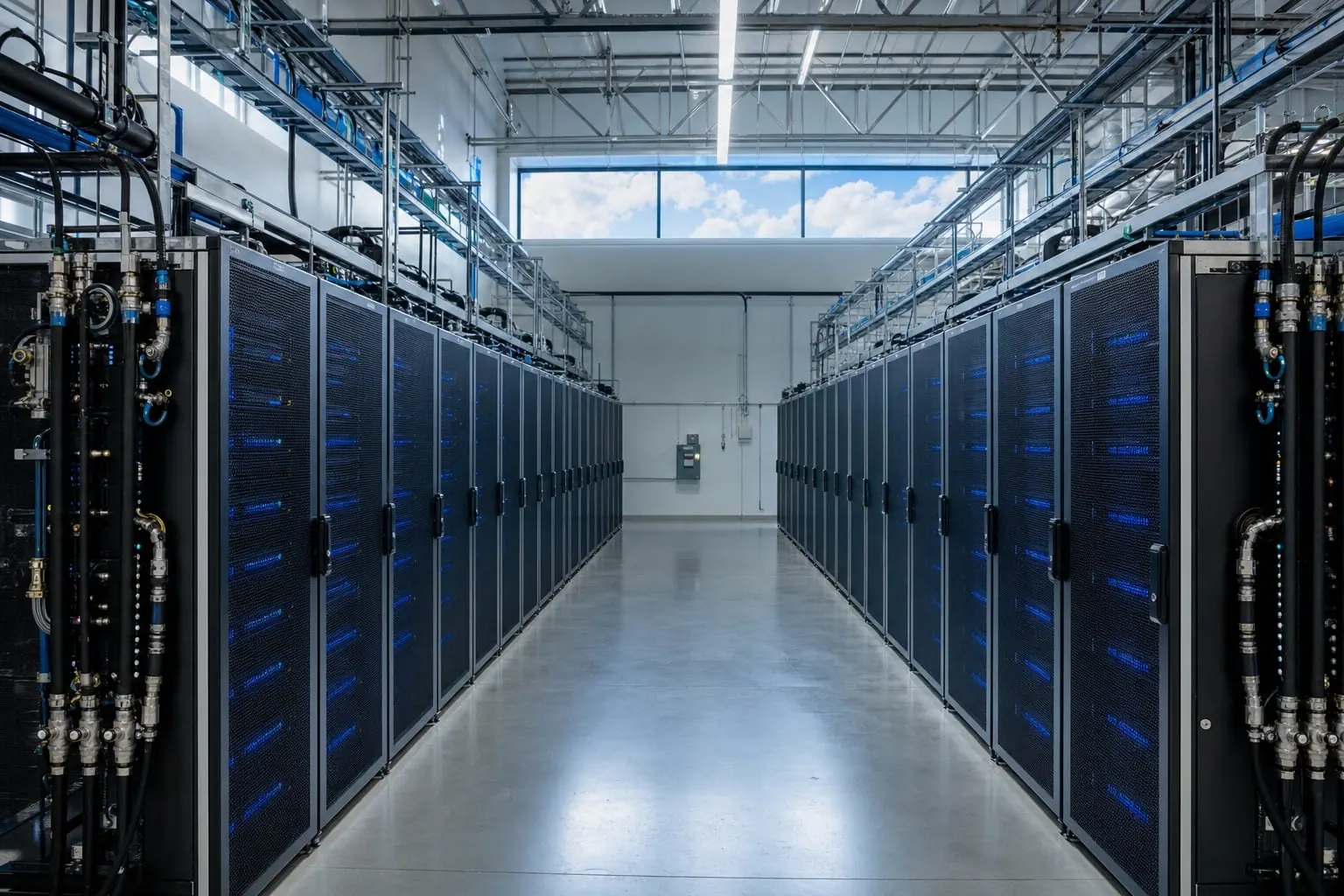
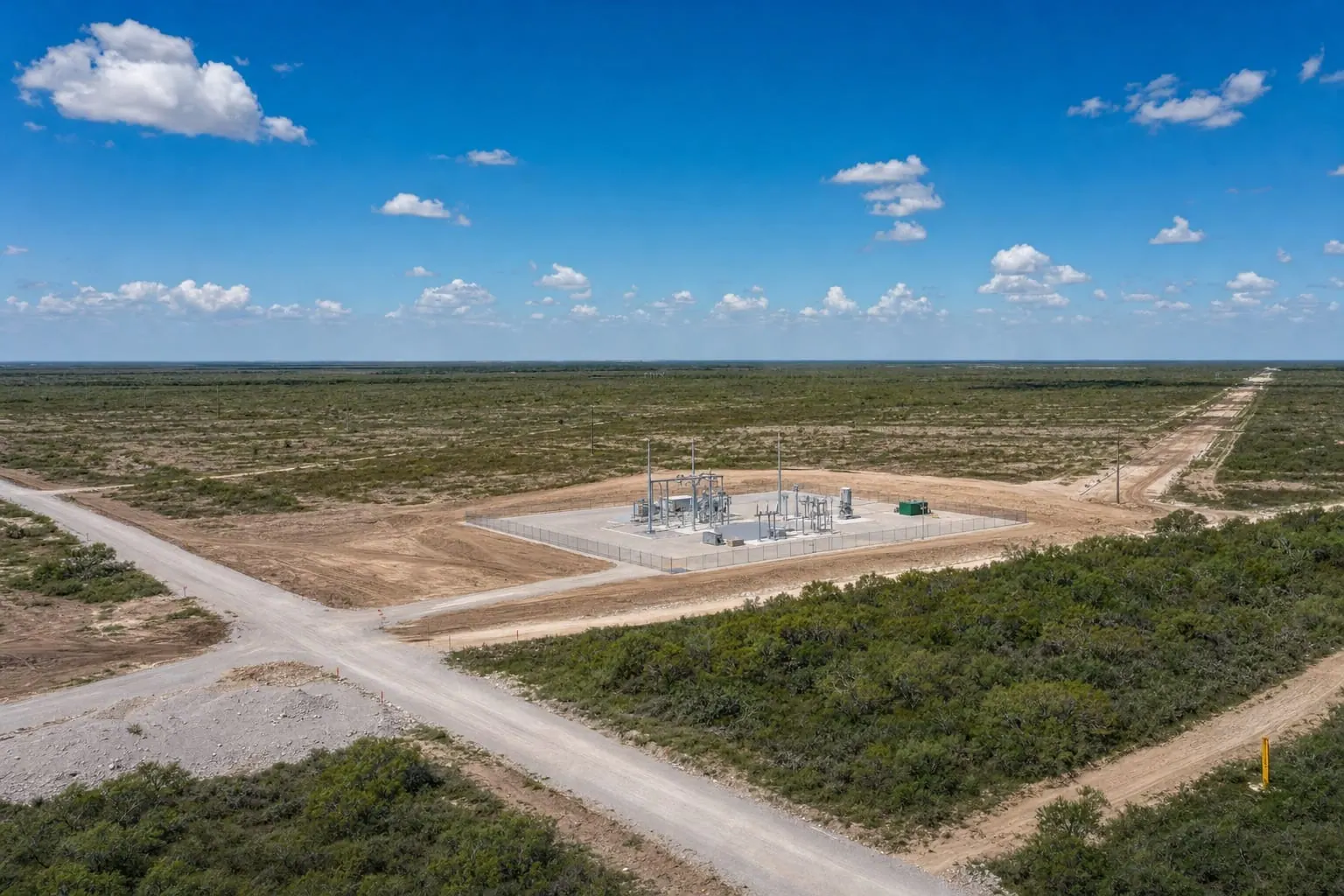
South ERCOT, Texas
An AI campus in development with on-site gas generation and storage, built to energize on its own power.
Explore the Texas campus →Solutions · Colocation & Hosting
PacinfraX AI colocation gives you rack, hall or dedicated-hall space with A+B power, liquid-cooling-ready rows, layered security and on-site teams, inside power-first campuses that energize without waiting on the interconnection queue. You ship the servers; we receive, stage and power them. Request capacity with your rack count and timing, and we reply within two business days.
Updated
1,200MW
Planned across four Vietnam sites
4
Vietnam site agreements signed 30 October 2026
20MW
Nam Thang Binh phase 1 IT load
10–50MW
Hyperscale block size
Who it's for
You own the hardware and the software stack. We give it a hall with power, cooling, security and people on site, so your engineers spend their time on the cluster.
Move private AI and core workloads out of an on-premises room into a secured hall with A+B power and on-site support.
Place clusters next to power, expand row by row, and serve your own customers from a hall sized to your fleet.
Host training and inference clusters in liquid-cooled rows, with a path from a single cage to a dedicated hall.
Bring client servers in on a planned schedule, with receiving, staging and remote hands that follow your runbook.
Three ways to take space
Pick the footprint that fits today. Each option sits on the same campus power, so moving up a step is an extension, not a migration.
| What matters | Rack or cage | Hall or suite | Dedicated hall |
|---|---|---|---|
| Best for | A first AI cluster, enterprise moves, SI and MSP client racks | Neoclouds and GPU fleets that fill several rows | AI labs and hyperscale programs |
| Footprint | Individual racks or a private caged row in a shared hall | A walled suite or a full hall | A whole hall inside a 10–50 MW block |
| Power and cooling | A+B feeds to each rack; air or liquid rows | Power and cooling laid out to your suite plan | Power path, cooling plant and redundancy set with you |
| Security boundary | Locked racks or a caged row | Private suite with its own access list | Dedicated entry, access control and hall perimeter |
| Network | Cross-connects from the meet-me room | Private fibre paths into your suite | Diverse routes and dark fibre to your hall |
| How you grow | Add racks in reserved positions | Expand into the adjacent suite | Take the next hall in the block |
What's included
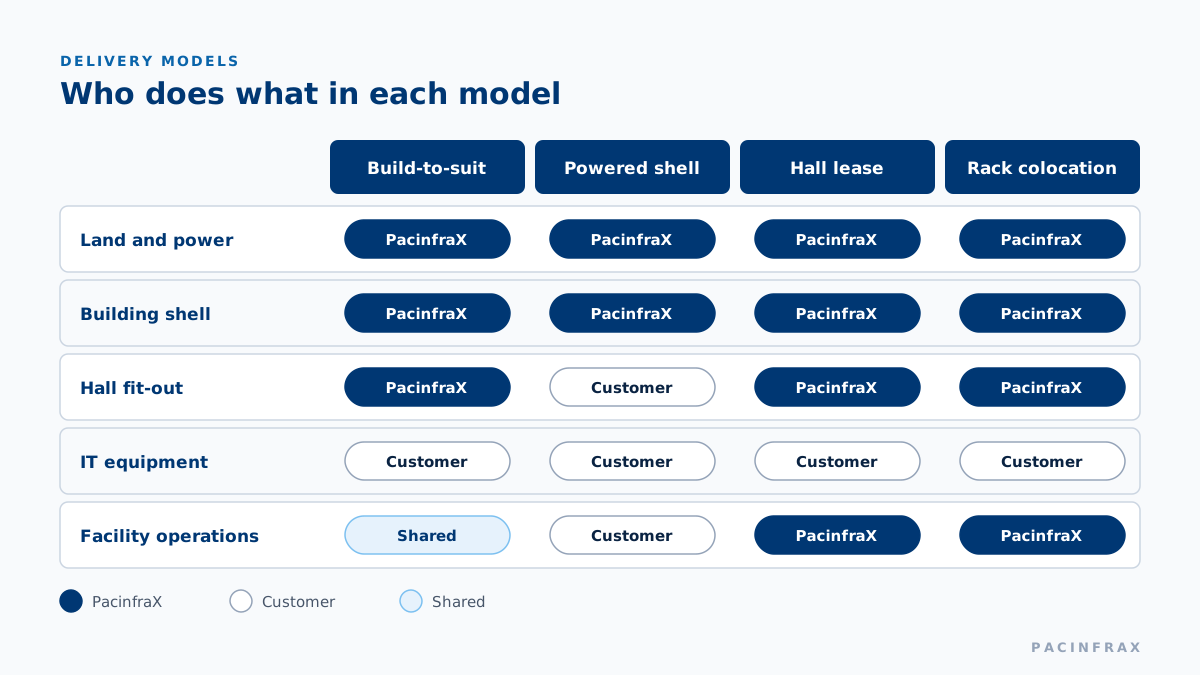
Every hall is run with the same seven services, so your first rack and your hundredth rack get the same care.
Racks, cages, suites or full halls, with adjacent positions reserved for your next phase.
Two independent feeds to every rack, metered per circuit, in halls designed around on-site generation and storage.
Air, rear-door and direct-liquid rows, sized to your racks, from air-cooled to direct-liquid densities.
Perimeter, building, hall and rack layers, with an access list that you control.
On-site technicians for reboots, part swaps, cabling and visual checks, each logged on a ticket.
A carrier-neutral meet-me room with fibre cross-connects to carriers, clouds and your other racks.
A loading dock, secure staging area and asset log for every shipment you send.
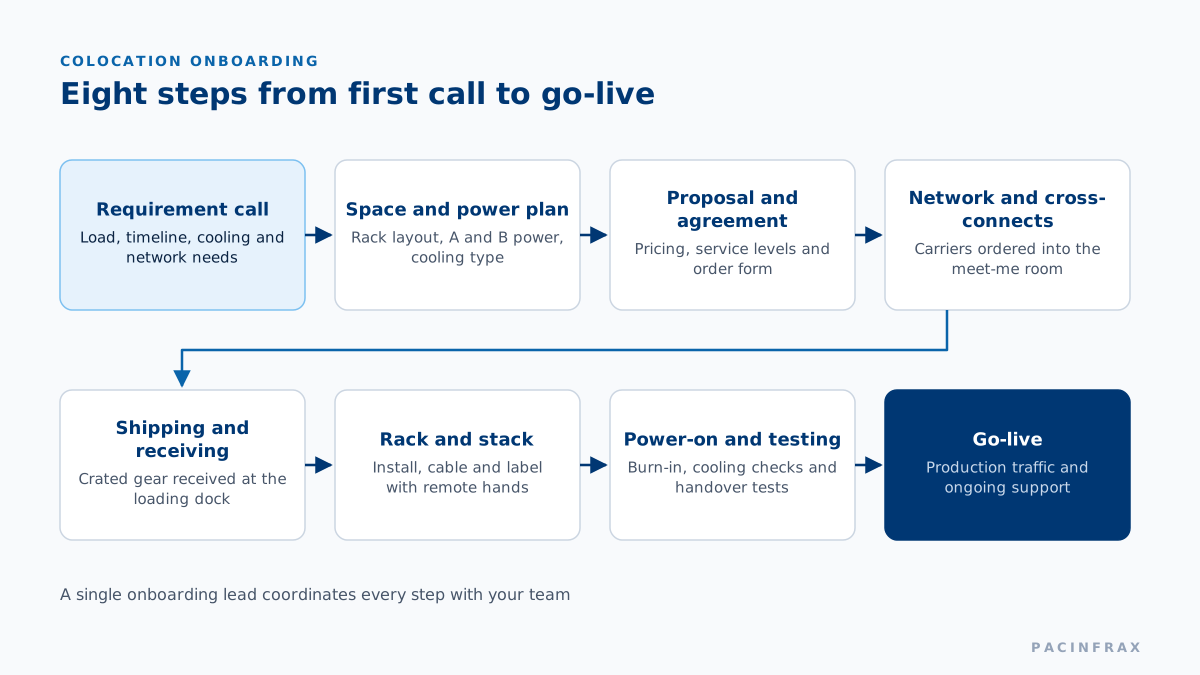
Bring your servers
Racks, power per rack, cooling, network and move-in date.
Rack elevations, power per rack and cooling for each row.
Space, power, services and the handover date in writing.
Rack and PDU assignment, access list, shipping address and packing rules.
Crates logged, inspected and held securely until install day.
Racking, cabling, labelling, power-on and burn-in.
Cross-connects, carriers and the meet-me room.
Remote hands, tickets, access and maintenance windows.
Read the full colocation onboarding guide, with a 13-point checklist for shipping your servers.
Design basis
| Element | Design intent |
|---|---|
| Power | A+B feeds through UPS and PDUs to each rack, per-circuit metering, and halls designed around on-site generation and storage. |
| Cooling | Air, rear-door heat exchangers or direct liquid through coolant distribution units, chosen per row. |
| Hall | Floor loading, ceiling height and cable trays planned for dense GPU racks in 42U, 48U and 52U sizes. |
| Security | Four layers: perimeter, building, hall and rack. |
| Network | Carrier-neutral meet-me room, dark fibre and copper or fibre cross-connects. |
| Operations | Remote hands, planned change windows and regular reporting on power and access. |
See the full colocation specifications, including a "You bring / We provide" table.

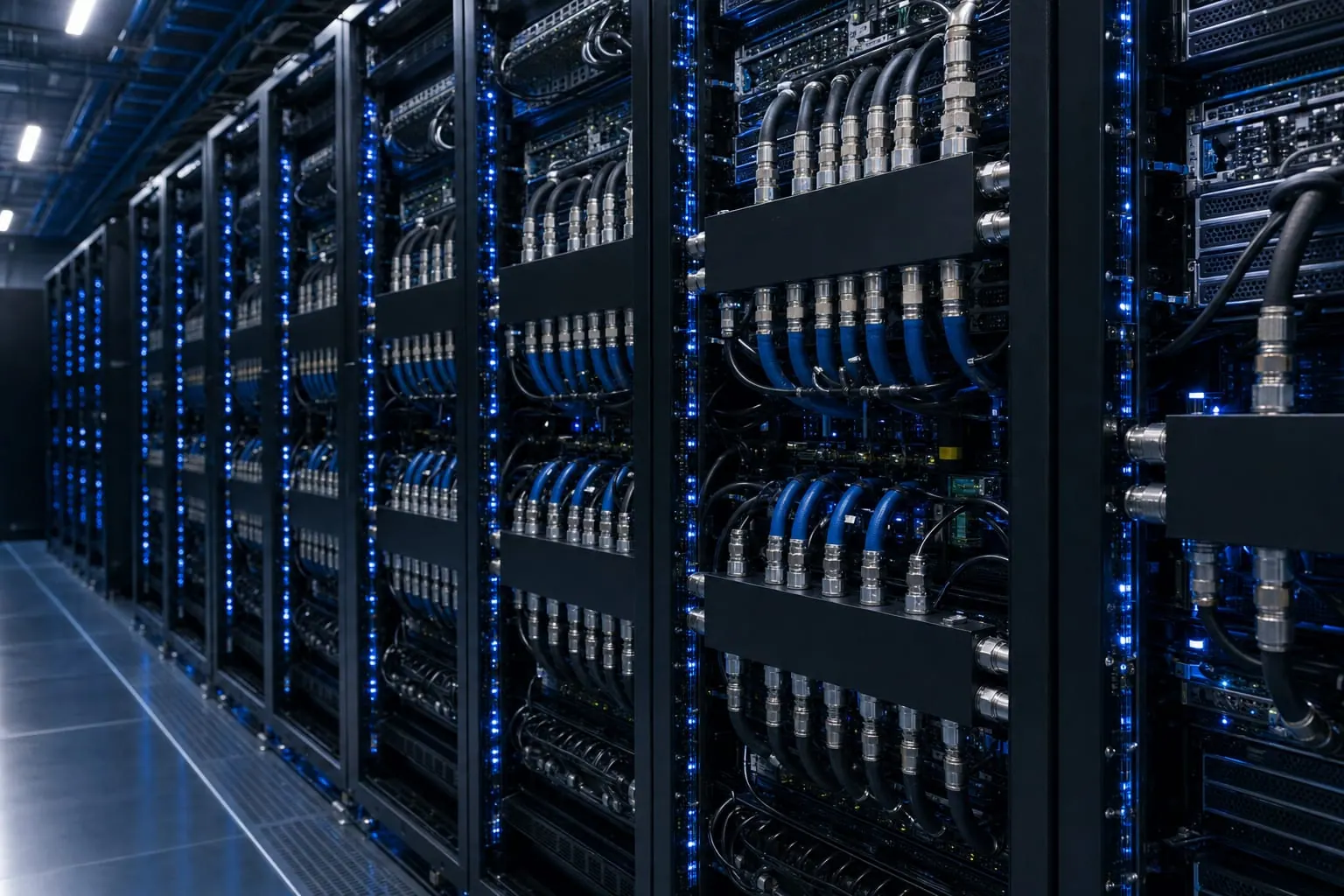
GPU hosting
GPU clusters need more than space. They need liquid-cooled rows, a cluster network with short cable runs, storage close to compute and room to add the next block of racks without moving the first one.
Plan your cluster with the GPU hosting guide.
Where available
Colocation is delivered in campus halls as they energize; Nam Thang Binh phase 1 (20 MW IT load) is targeted for 2026–2027 — reserve your requirement now.
An AI campus in development with on-site gas generation and storage, built to energize on its own power.
Explore the Texas campus →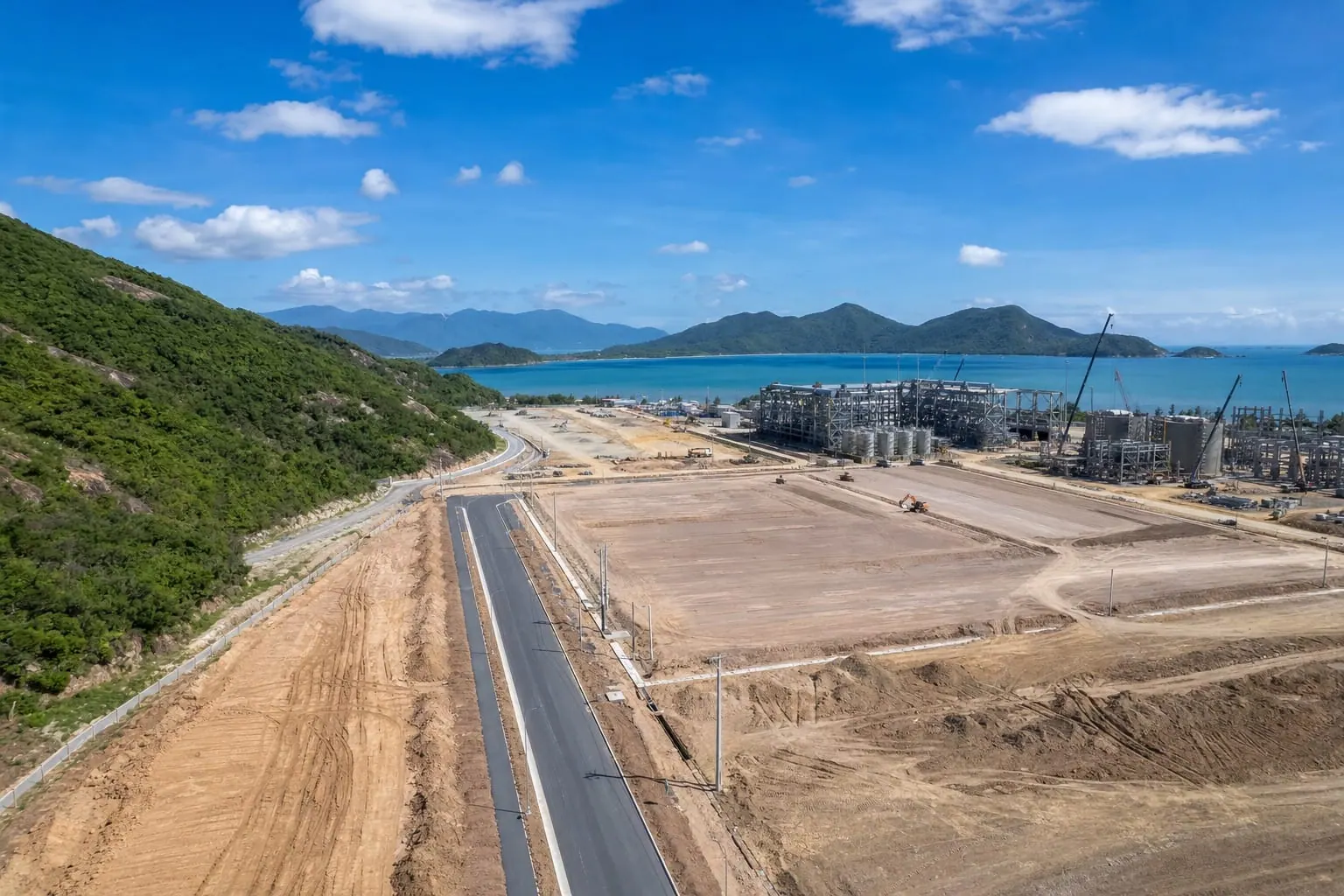
1,200 MW planned across four sites, led by Nam Thang Binh in Da Nang with 200 MW.
Explore Vietnam sites →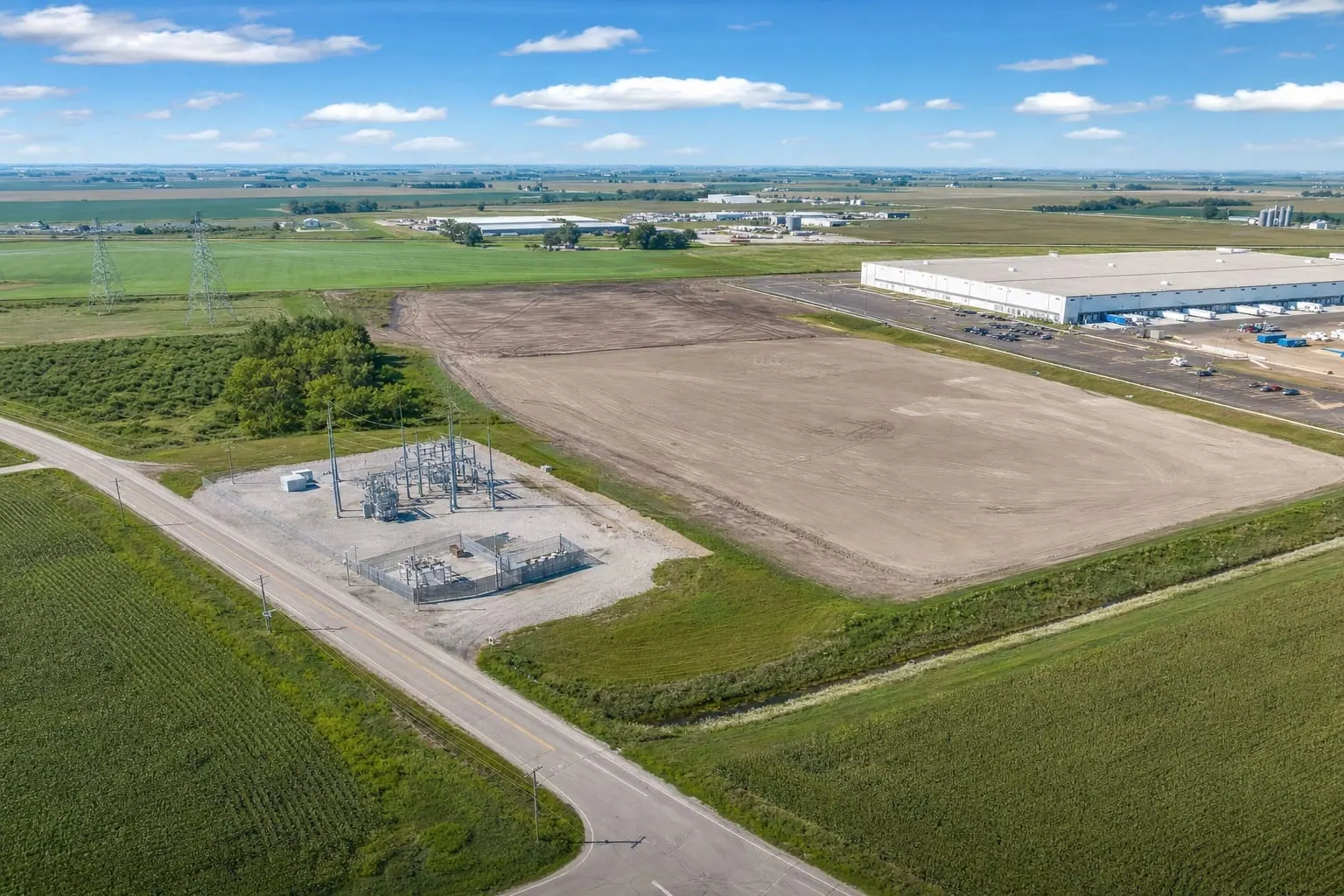
Minnesota, powered industrial site.
Explore the Minnesota site →Why PacinfraX
Most colocation moves start smaller than the final footprint. We plan for that from day one. The design review covers the rows you need now and the space you will need next, and we reserve adjacent positions for you.
Because every campus is power-first, growth follows our energization schedule rather than a utility queue. A cage becomes a suite, a suite becomes a hall, and a hall becomes a dedicated block, all on the same power island and the same team.
Read why customers choose a power-first campus and how every hall is designed around on-site generation and storage.
FAQ
AI colocation is data center space, power, cooling and security built for GPU servers. You own and run the hardware; PacinfraX runs the hall around it, from the loading dock to the meet-me room.
Choose racks or a cage for a first cluster or an enterprise move, a suite or hall when your fleet fills several rows, and a dedicated hall when you want your own entry, power path and cooling plant. You can move up a step on the same campus.
Rows are sized to your racks, from air-cooled to direct-liquid densities. Share rack power, server model and cooling type at the requirement call, and the design review sets the power and cooling for each row.
Yes. Your pre-install pack includes the receiving address and labelling rules. The dock team logs each crate, checks it for damage and holds it in secure staging until your install date.
Yes. Every hall is run with on-site technicians for reboots, part swaps, cabling, labelling and visual checks. You open a ticket, the technician follows your instructions and the ticket records what was done.
Order cross-connects from your rack to the carrier-neutral meet-me room. Bring the carriers you already use, add new ones, or run dark fibre between your racks and other sites.
Colocation halls are planned in South ERCOT, Texas, and at four Vietnam sites with 1,200 MW planned, led by Nam Thang Binh in Da Nang. Tell us your market and date, and we match you to the first hall that fits.
Yes. We reserve adjacent positions for your next phase and plan power and cooling for the full footprint from the first design review, so growth is an extension of the same hall.
Rack count, power per rack, cooling type, network needs, preferred market and move-in date. A rough number for each is enough for the first call.
We reply within two business days of your Request capacity form with next steps and a time for the requirement call with a colocation engineer.
Comparing options across our portfolio? See all solutions.
Request capacity
Tell us your racks, power per rack and move-in date. We reply within two business days with next steps and a time to meet a colocation engineer.
Rough figures are enough. The Request capacity form collects them in one place.
Power-first AI capacity
Request capacityTalk to PacinfraX
We reply within two business days. WhatsApp and email work at any hour.