What is driving Vietnam's AI infrastructure demand
Three forces push capacity requirements up at the same time. Cloud and AI adoption across Vietnamese enterprises and platforms create local demand for compute and storage. Global AI developers look for new regions with energy and land available for large clusters. And data rules, covered below, give customers a reason to host close to their users.
The result is a market where the question has shifted from whether to build data centers to where power and land line up. Buyers evaluating Vietnam for the first time should compare sites on the same terms they would use anywhere: energization date, block size, cooling design and connectivity. Our guide to writing an RFP for AI capacity gives a structure for that comparison.
Who buys capacity and what each needs
| Buyer | What they need |
|---|---|
| Hyperscalers and AI labs | Large powered blocks for training and regional inference, with a credible energization date. |
| Neoclouds and GPU hosting | High-density liquid-cooled halls, fast onboarding and flexible block sizes. |
| Enterprises and platforms | In-country hosting for data that must stay local, with carrier-neutral connectivity. |
| Industrial and marine buyers | Co-located power and, over time, hydrogen and ammonia from the same campus. |
PacinfraX contracts hyperscale blocks of 10 to 50 MW. Smaller GPU deployments fit a colocation hall. Both paths are covered in colocation vs build-to-suit vs powered shell.
Power: the national plan and the site plan
Vietnam's national power development plan, known as PDP8, was adjusted by Decision No. 768/QD-TTg of 15 April 2025. The Ministry of Industry and Trade has directed provinces to incorporate the power generation and grid projects identified in the adjusted PDP VIII into provincial planning, so the plan now reaches site level. Government announcements are published in English by the government news portal.
A national plan sets the direction. A data center needs a site-level answer: which substation, which voltage, what date and what happens during outages. For that reason the PacinfraX approach pairs each hall with its own power design, which can combine a grid connection, on-site generation and battery storage. See power infrastructure.
Connectivity: subsea cables and domestic fibre
Latency to regional hubs, route diversity and landing-station access define how a Vietnam site serves inference, cloud on-ramps and enterprise workloads. Vietnam is served by several submarine cable systems, and TeleGeography's submarine cable map lists the systems landing in the country.
For training clusters, distance to demand matters less than power and cooling. For inference and enterprise hosting, buyers should ask which carriers reach the campus and whether two diverse routes are available. A carrier-neutral meet-me room, described in our glossary, keeps those choices open.
Economic zones, industrial parks and the 2025 provincial mergers
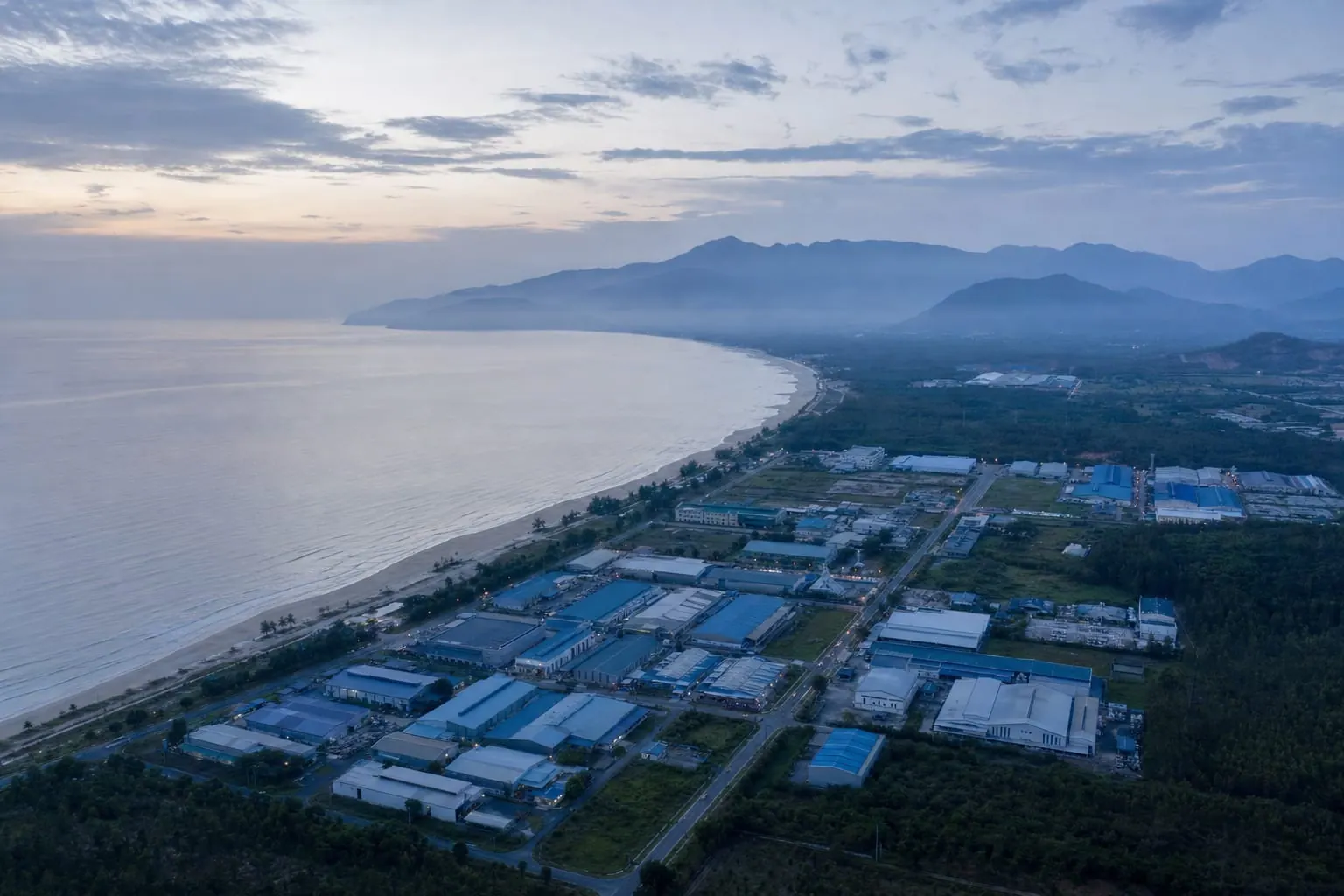
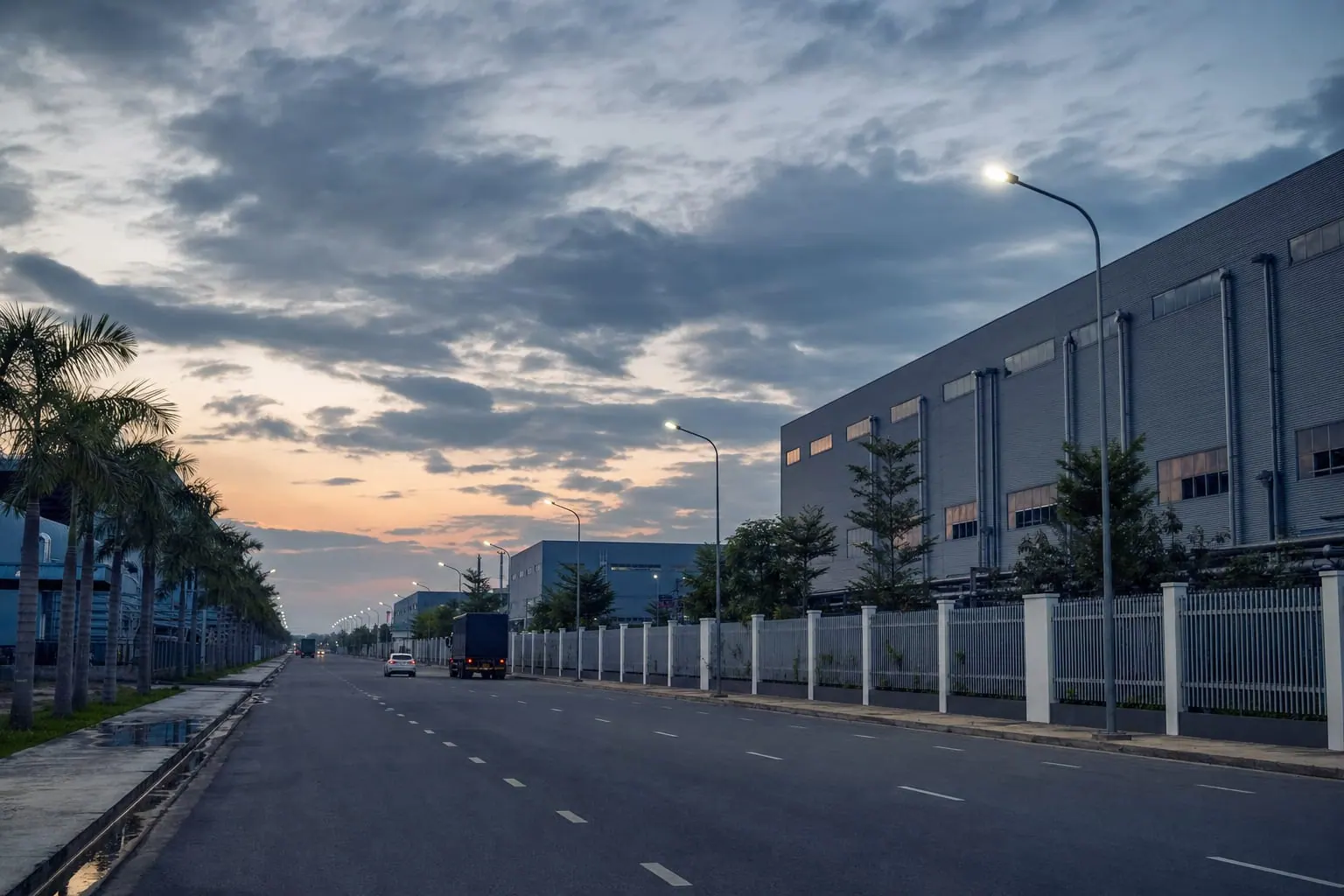
Industrial parks and economic zones offer serviced land, utilities and a single approvals path. They are the natural home for large campuses.
In 2025 Vietnam merged provinces. Phu Yen is now part of Dak Lak, Tra Vinh is part of Vinh Long and Quang Nam is part of Da Nang. Buyers reading older market material should map site names to the new provinces, as in the diagram below.
Data rules and customer assurance
Vietnam has rules on personal data protection, cybersecurity and cross-border data transfer. Which rules apply depends on the customer, the data and the workload. For buyers, the practical consequences are straightforward: ask where data is stored, who operates the facility, how access is controlled and what the incident process is.
A strong operator answers these questions with documents: access policies, audit trails, segregated tenant zones and a clear incident process. Ask for a documented handover. Bring your counsel to the first call and we will map the facility design to your requirements.
PacinfraX Vietnam: four site agreements
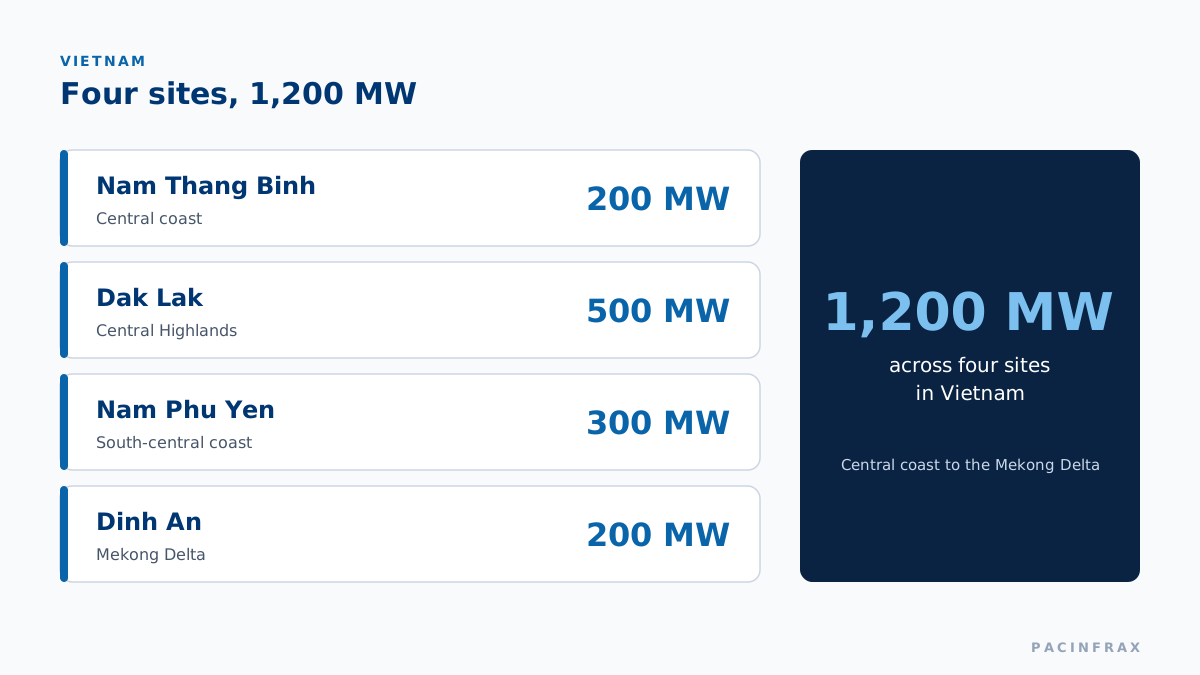
PacinfraX Vietnam is led by CEO Quat Bao, a Silicon Valley technology veteran with decades across solar, wind and AI chipsets and experience in structured finance and EPC for solar, BESS and AI data center projects. On 30 October 2026 we announced four site agreements, signed with companies of BIN Corporation.
| Site | Planned capacity | Notes |
|---|---|---|
| Nam Thang Binh, Da Nang | 200 MW | Developed with NTB Industrial Park JSC. Phase 1 targets 20 MW of IT load in 2026–2027. |
| Dak Lak (Ea Wer) | 500 MW | Central Highlands site, the largest of the four agreements. |
| Nam Phu Yen Economic Zone | 300 MW | South-central coast economic zone. |
| Dinh An, Vinh Long province | 200 MW | Mekong Delta site, in Vinh Long province (formerly Tra Vinh province, part of Vinh Long since the 2025 merger). |
Read the announcement in Vietnam site agreements, see the market page at Vietnam locations and meet the team on the leadership page.
Phasing from 20 MW to 1,200 MW
Large campuses are delivered in phases, and Vietnam is no exception. Phase 1 at Nam Thang Binh targets 20 MW of IT load in 2026–2027. That first block proves the power design, the cooling design and the operating model on one site, in a location with an industrial park partner already in place.
Later blocks follow customer commitments. A buyer who signs for the first block gets a clear path to add capacity on the same campus, and a buyer with a larger requirement can combine blocks across sites. Phasing also keeps capital aligned to demand: power plant, substation and halls are added together, so nothing sits idle.
The same phased model is the backbone of our AI data center offer. If you need a small GPU deployment before a large build-to-suit hall, start with colocation and move into your own block when your clusters outgrow it.
How to evaluate a Vietnam site
Ask each developer the same six questions.
- What is the energization date for the first block, and what does it depend on?
- Which power sources serve the campus at day one and at full build?
- What block sizes can I contract, and how do I add the next one?
- What cooling design is the hall built for?
- Which carriers and cable systems reach the campus?
- Who builds, who operates and who do I call at 3 a.m.?
The same questions work for Texas and Minnesota, which makes multi-market comparison easy.
Vietnam market questions, answered
Is Vietnam a good market for AI data centers?
It combines a large digital economy, growing cloud and AI demand, new submarine cable capacity and government attention to digital infrastructure. The limiting factor is energized capacity close to demand, which is exactly where a power-first developer helps.
Where does PacinfraX plan to build in Vietnam?
PacinfraX Vietnam has signed four site agreements with companies of BIN Corporation: Nam Thang Binh in Da Nang (200 MW), Dak Lak (500 MW), Nam Phu Yen Economic Zone (300 MW) and Dinh An in Vinh Long province (200 MW). The plan totals 1,200 MW.
When is the first capacity available?
Phase 1 at Nam Thang Binh targets 20 MW of IT load in 2026–2027. Later phases follow as customers commit, in blocks sized to demand.
Can a foreign company host AI infrastructure in Vietnam?
It depends on the structure, licensing and data rules for the customer and workload; we walk through them on the first call with your counsel.
How does power work at these sites?
Each site pairs the data hall with a power design. Depending on the site, that means a grid connection, on-site generation and storage, or a bridge between the two. The right mix is set during design with the local utility and the host authorities.
How do I start a conversation about Vietnam capacity?
Use Request capacity and select your market. Tell us the load, the timeline and whether you need a build-to-suit hall or colocation racks. We reply within two business days.
Sources and further reading
- Ministry of Industry and Trade: key power projects, the ministry's directive to implement Decision No. 768/QD-TTg and the adjusted PDP VIII.
- Vietnam Government News (English), official announcements and policy coverage.
- TeleGeography submarine cable map: Vietnam, systems landing in the country.