Why AI developers look at Texas
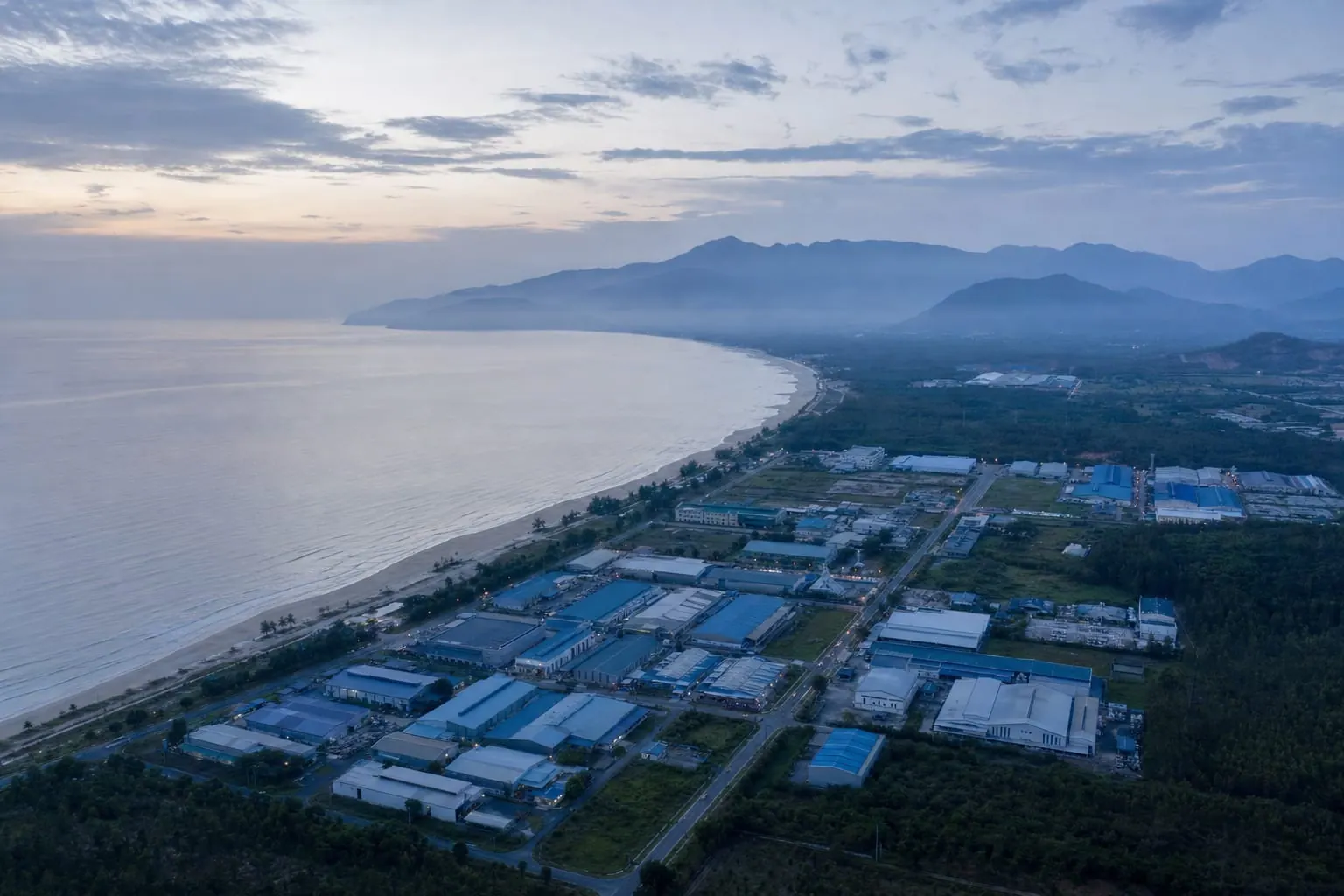
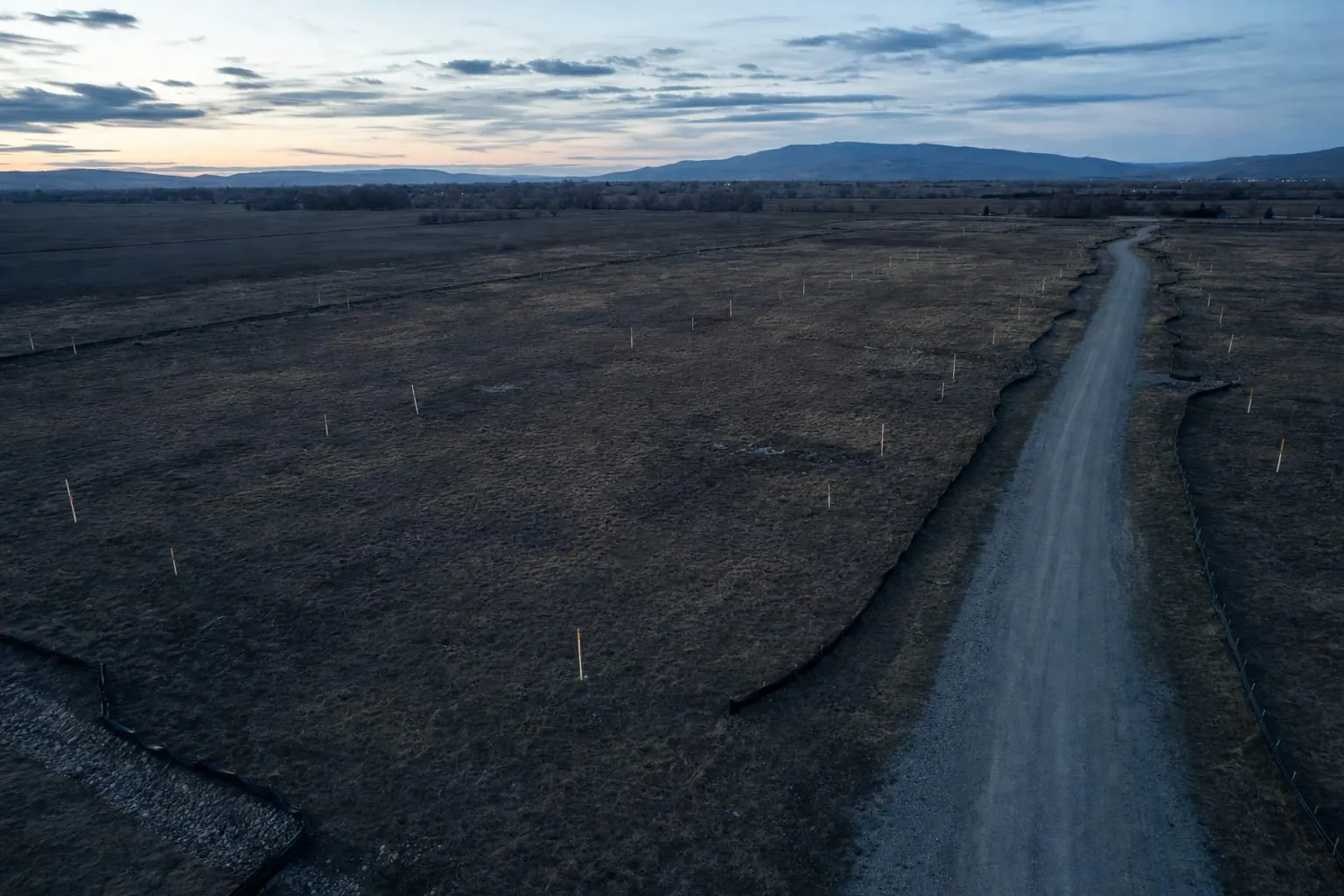
Four traits make Texas a leading location for power-hungry AI campuses. Land is flat and available at industrial scale. Natural gas is abundant, and the pipeline network is dense. The power market is competitive, with generators, retailers and large customers contracting directly. And state and local governments treat large industrial investment as welcome.
These traits help every kind of buyer, from a neocloud that needs one 10 MW block to a hyperscaler planning several. But they do not remove the central problem of any large load: the grid has to deliver the power on the date the racks arrive.
How ERCOT treats large loads
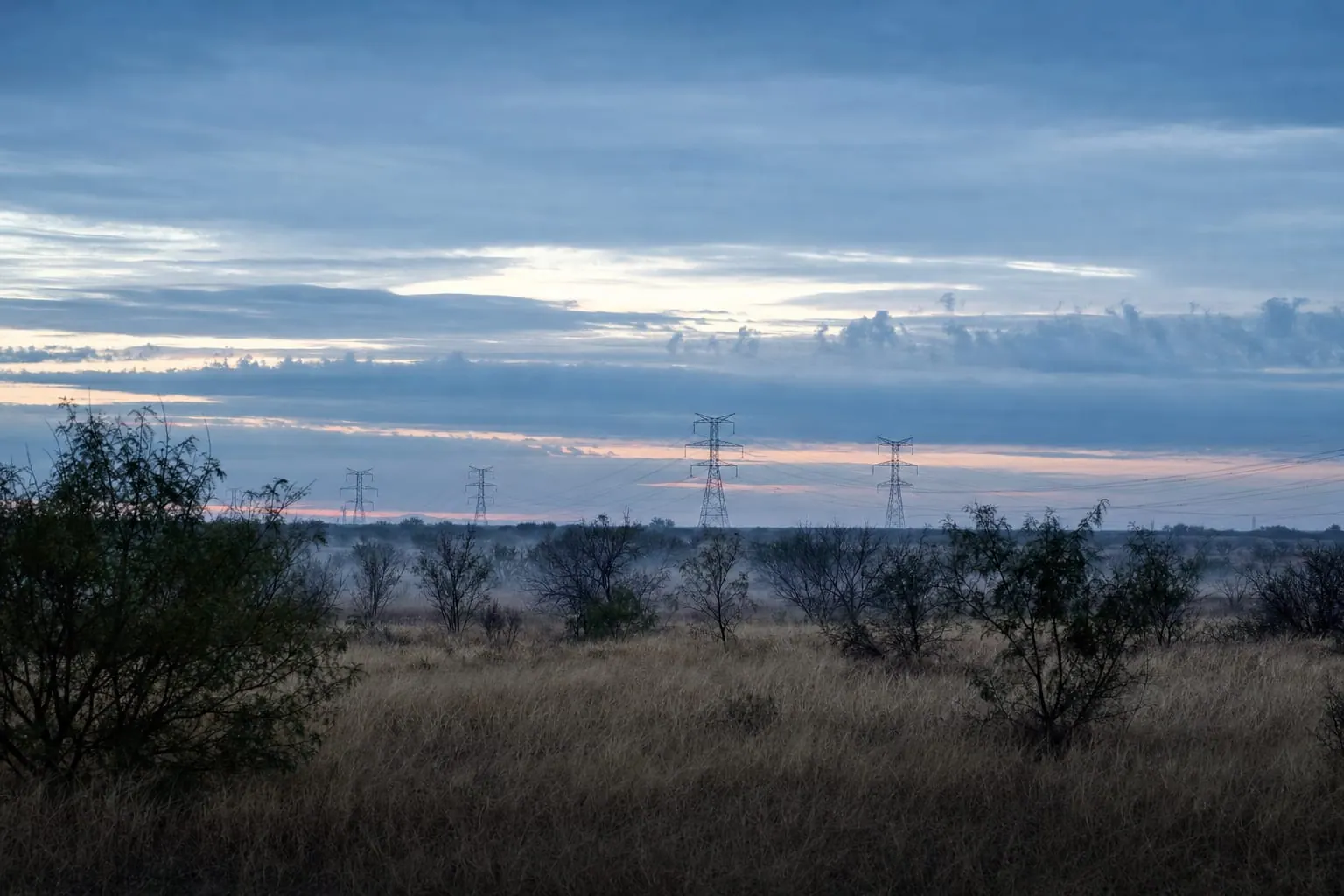
The Electric Reliability Council of Texas, ERCOT, operates the grid that serves most of the state. ERCOT runs a large-load interconnection process, and its large load integration page (accessed October 2026) directs entities wishing to interconnect a load facility of 75 MW or greater through Batch Zero to PGRR145 to determine their eligibility path.
For a buyer the practical points are these. Large loads go through studies that look at the effect on transmission, generation adequacy and reliability. The interconnecting utility submits forms and workbooks. Dates and rules evolve, so check the ERCOT page for the current version. Timelines depend on study results and any upgrades they require.
The Public Utility Commission of Texas oversees the market rules that sit behind these processes; its site is at puc.texas.gov.
South Texas natural gas: the fuel for a power island
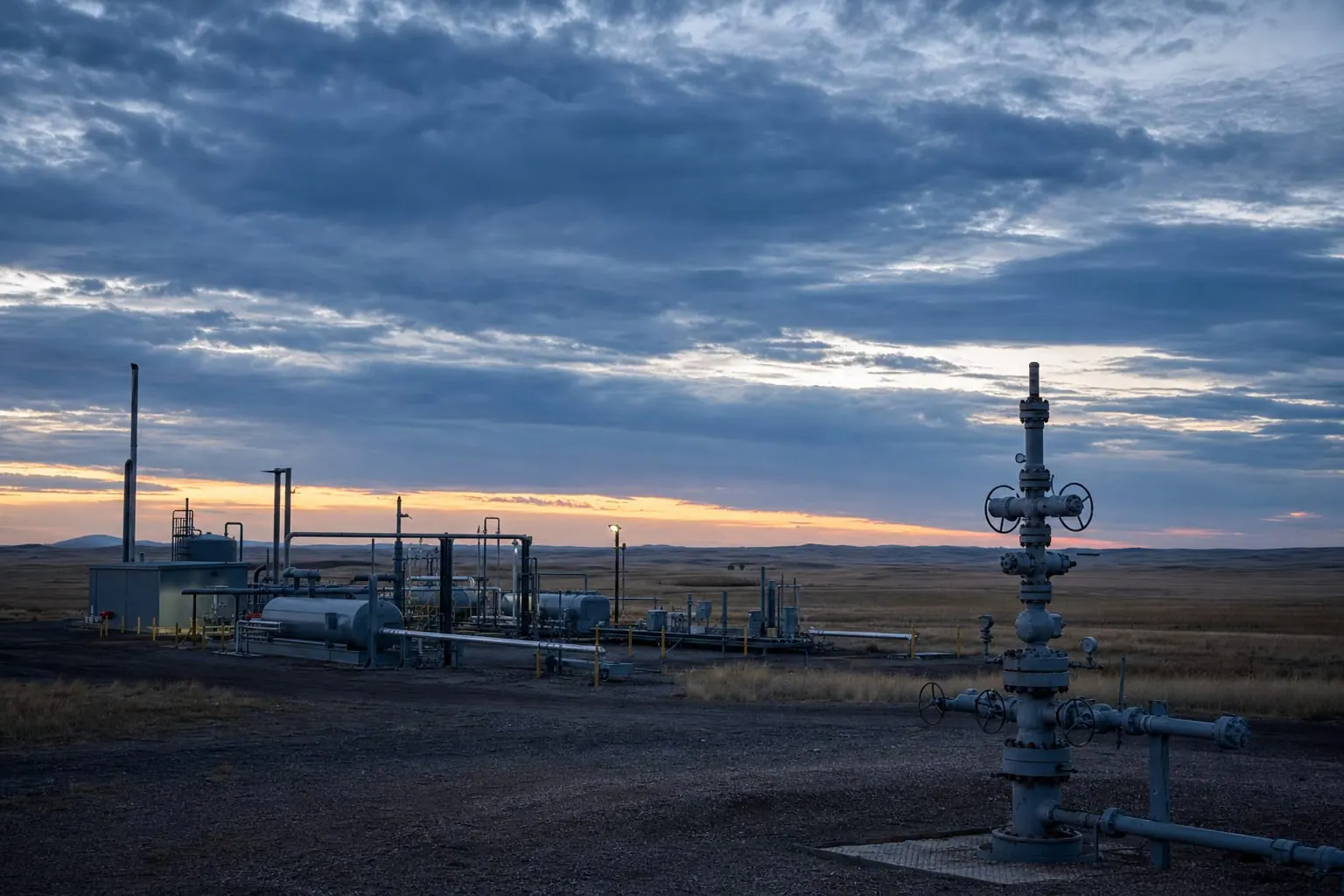
Texas is a leading natural gas state, and gathering and transmission lines cross the south of the state. The US Energy Information Administration publishes state energy profiles at eia.gov for readers who want production and consumption data.
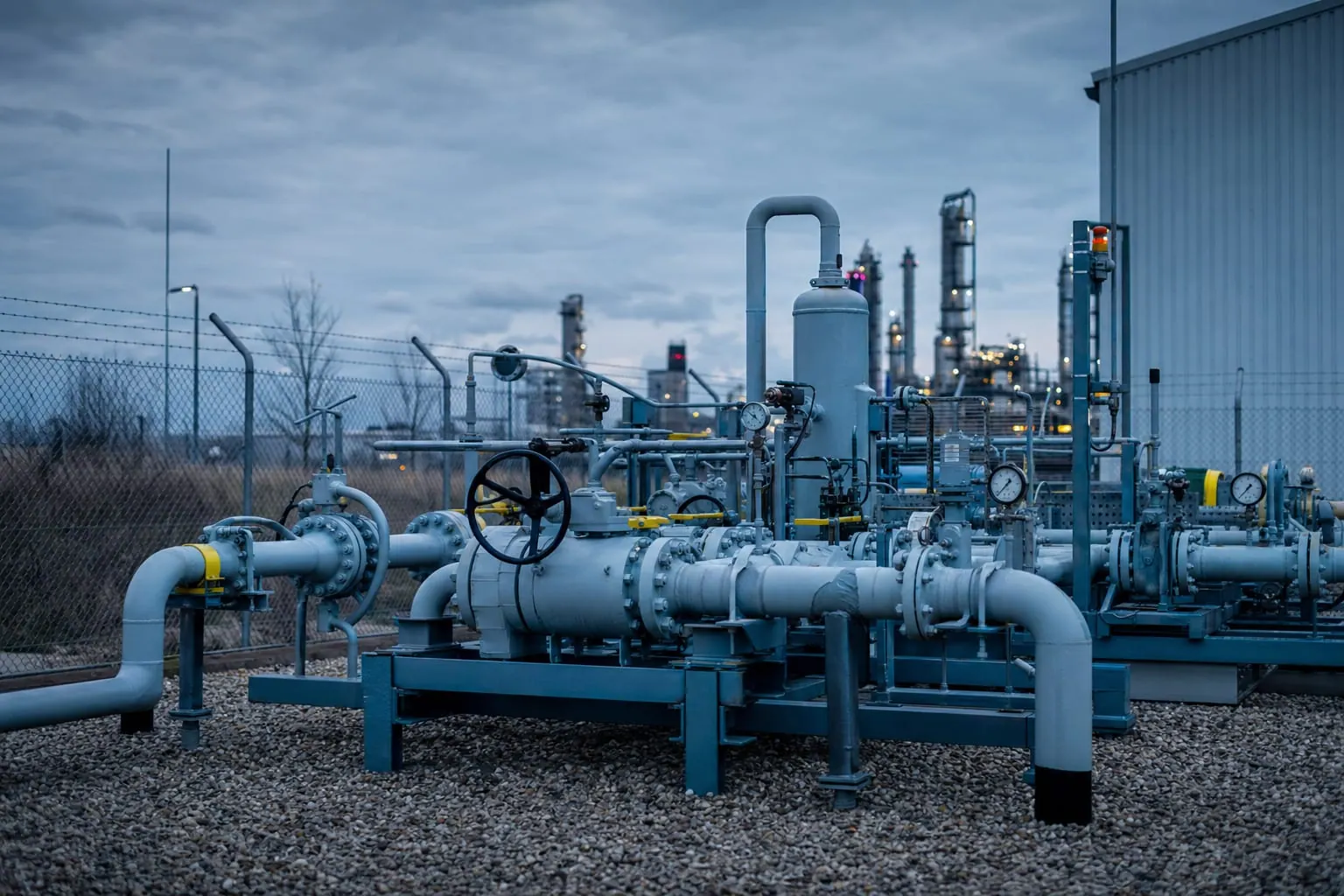
Gas near the site changes the project. Natural gas reciprocating engines or turbines, supported by battery storage, can serve a campus directly. The engineering questions are pipeline capacity, pressure, the metering and valve station, air permitting and a fuel-resilience plan. Our power infrastructure page describes the equipment and the redundancy approach.
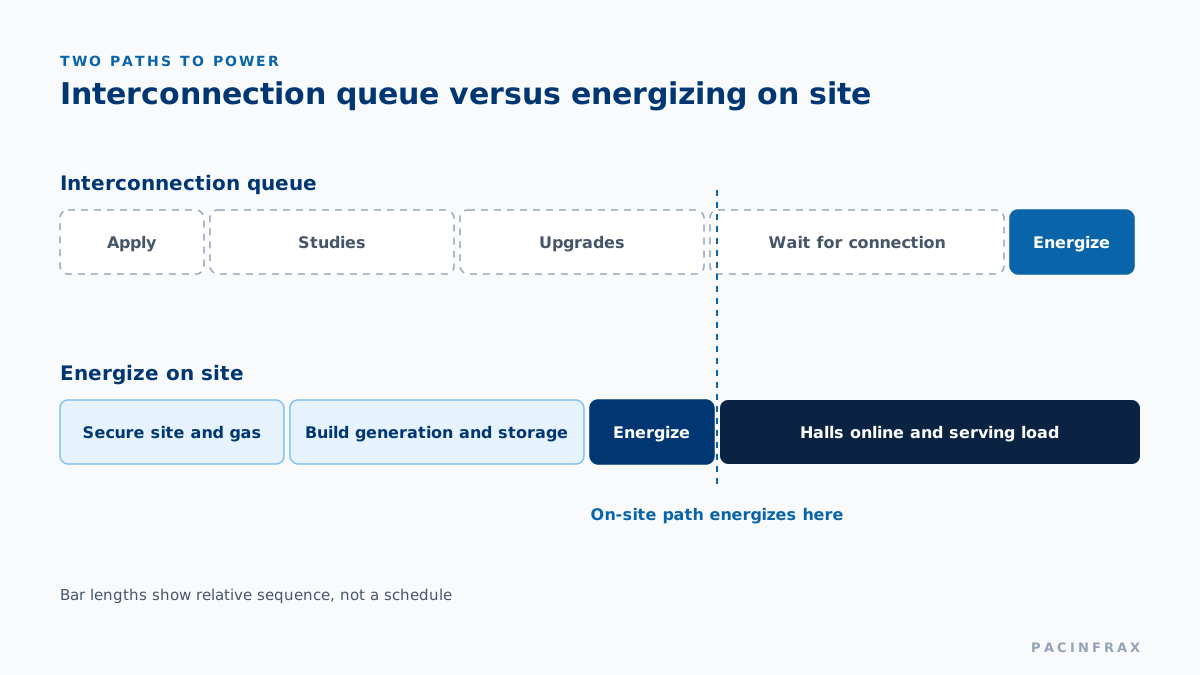
Queue versus on-site: how the paths differ
A grid-only project waits for studies, then for any network upgrades, then for construction of the connection. Each step sits with the utility or the market operator. An on-site project runs the power plant construction in parallel with the hall, and the date depends on equipment delivery and permits that the developer controls.
| Path | Best fit | What to plan for |
|---|---|---|
| Utility interconnection only | Sites near strong transmission with a queue position and a clear study timeline. | Study, upgrade and construction steps set the date. Little of it is in your control. |
| On-site gas generation and storage | Sites near a transmission-grade gas pipeline where speed matters. | Needs gas supply, air permits and a fuel-resilience plan. |
| Bridge-to-grid (on-site first, grid later) | Campuses that want energy now and a utility connection for the long term. | Design the switchgear and protection for both modes from the start. |
Designing on-site power for AI loads
GPU clusters ramp up and down in seconds, and a power island must absorb those swings without tripping. Four design elements do the work.
- Redundant generation. Several engines or turbines, sized so the campus runs with one unit out.
- Battery energy storage. Ride-through for load swings and a buffer during start-up and fault events.
- Switchgear and protection. Built to operate islanded and grid-connected.
- Controls. A SCADA layer that coordinates generation, storage and the data hall.
For the bridge-to-grid design, see power-first data center development. For storage roles in detail, read the glossary entries on BESS and bridge-to-grid.
The South ERCOT campus
PacinfraX is developing an AI campus in South ERCOT, Texas, with on-site gas generation and storage. It follows the power-first model: power, cooling and hall are designed together, then delivered in phased blocks.
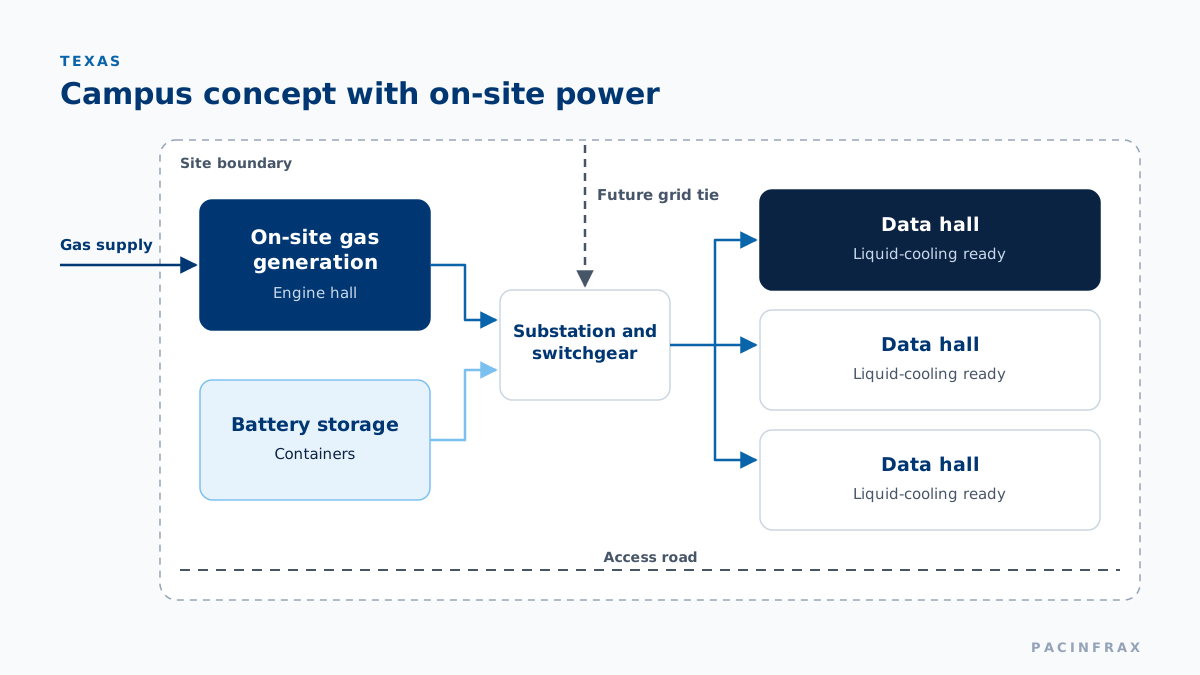
Details are on the Texas location page. If your requirement is 10 MW or more, tell us the load and timeline through Request capacity.
Permits, fuel resilience and heat
Three workstreams run alongside the engineering and decide whether an on-site plant reaches commissioning on time.
- Air permits. Gas engines and turbines emit combustion products, so the state environmental regulator issues permits that define emission limits and testing. Start the application early and size the plant to the permit, not the other way round.
- Fuel resilience. A firm gas contract, a pipeline with more than one supply source and, where the design calls for it, on-site fuel storage keep the campus running through a supply disruption.
- Heat rejection. South Texas summers are hot. Liquid-cooled halls can reject heat at higher fluid temperatures than air-cooled halls, which makes dry cooling more practical and cuts water use. Read liquid cooling for AI data centers for the design options.
Treat each as a gate on the schedule. A developer who can show status on all three is further along than one who shows only a rendering.
What a grid-only timeline looks like
For a project that depends on the utility alone, the sequence has recognizable steps, and each one has an owner you do not control.
- Submit the large-load request and supporting data to the interconnecting utility.
- Wait for ERCOT and utility studies on the effect of the load.
- Agree the interconnection facilities and any network upgrades.
- Build the substation and line, which depends on equipment lead times and right-of-way.
- Energize, test and release load in steps.
Buyers who need capacity on a fixed date should ask which of these steps the developer controls. On-site generation moves the critical path from steps two to four onto a plant the developer builds. The grid request still goes in early, so the campus can connect when the utility is ready. That is the bridge-to-grid approach.
Questions to ask any Texas developer
- What is the energization date, and which parts of it are in your control?
- Is there a gas supply agreement or a pipeline tap right?
- Which air permits are needed, and what is their status?
- How does the campus run if one engine fails?
- How does the design change when the grid connection arrives?
- What is the hall's cooling design and rack density?
Texas power questions, answered
Why is Texas attractive for AI data centers?
Texas combines large areas of flat, low-cost land, a deep natural gas pipeline network, a competitive power market and a business-friendly permitting climate. Those four things together make the state a natural place to build power-first campuses.
Do I need to join the ERCOT queue to build a data center in Texas?
Large loads that connect to the ERCOT grid follow its large-load interconnection process. A campus that energizes on on-site generation first can start operating while a grid connection is studied, then connect later through a bridge-to-grid design.
Is natural gas generation reliable enough for AI workloads?
Multiple engines in an N+1 or better arrangement, battery storage for ride-through and a firm fuel supply give a reliable power island. Storage also smooths the sharp load swings of GPU training clusters.
Where is PacinfraX building in Texas?
In South ERCOT, where an AI campus is in development with on-site gas generation and storage. Request capacity to discuss block sizes and timing.
What size can I contract in Texas?
PacinfraX AI data center blocks run from 10 to 50 MW; South ERCOT block sizes are set with each customer. Blocks are phased, so you add capacity as clusters grow. Smaller GPU deployments fit our colocation halls.
What should I prepare before contacting a Texas developer?
Your load in megawatts, the target energization date, the cooling approach, and whether you want build-to-suit, a powered shell or colocation. The RFP guide in this library lists the rest.
Sources and further reading
- ERCOT: large load integration, the process and forms for loads that connect to the ERCOT grid.
- US EIA: Texas state profile, energy production and consumption data.
- Public Utility Commission of Texas, the regulator for the state electricity market.