
Government and communities
Working with governments and communities on data centers
PacinfraX works with economic development agencies, utilities and local communities to build AI data center campuses that add investment, jobs and local business. Our power-first model brings its own generation and storage, so new load arrives without waiting on the grid. We plan every campus with the region around it.
What we bring
Investment that works for your region
-
Economic development
A data center campus brings long-term capital investment and a stronger local tax base, and draws new digital industry.
-
Jobs and skills
Construction creates trade jobs, and operations create skilled technical roles. We plan training pathways with local schools and colleges.
-
Local procurement
We bring regional contractors, materials and suppliers into each campus.
-
Permitting partnership
We bring complete, early applications and a single point of contact, so your teams review a clear plan on a clear timeline.
-
Community engagement
We brief residents early, name a local contact and keep neighbors informed from first works to operations.
Three ways to work with us
A route for every public partner
Economic development agencies
Attract AI investment to your region. We share our site criteria, work through incentives and permitting with you, and plan local hiring and procurement with you.
Utilities and grid operators
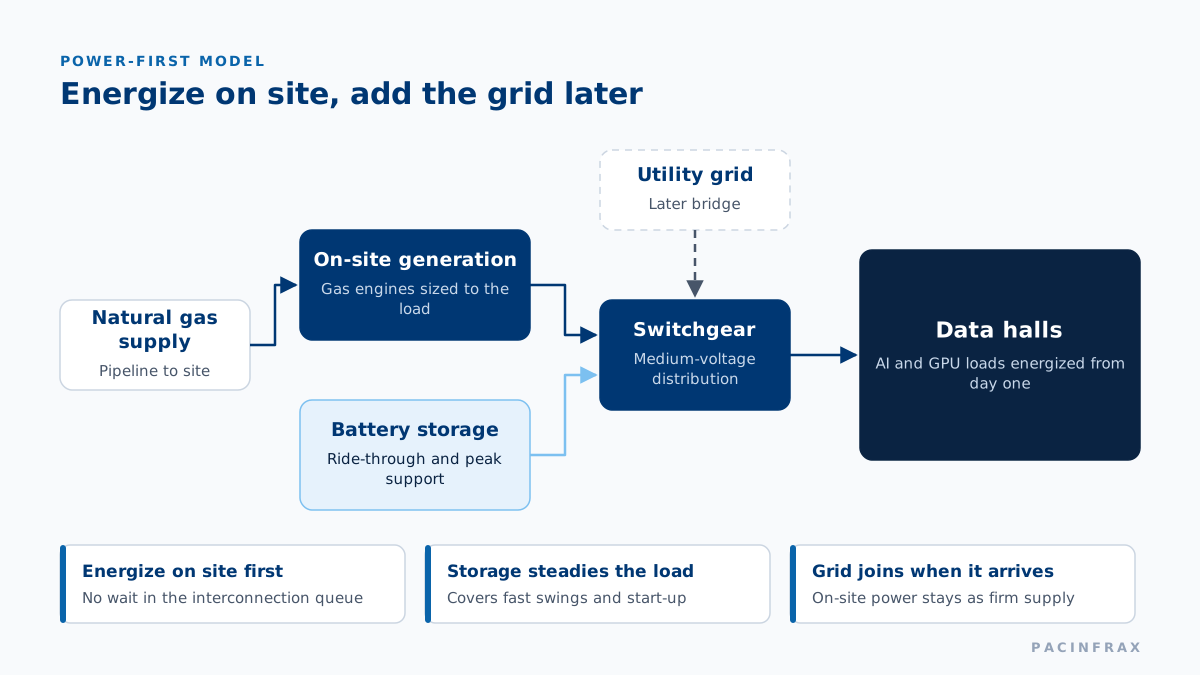
Add large new load on a plan you agree. Where a site needs it, on-site natural gas generation and battery storage carry the campus, and any grid connection follows a schedule agreed with you.
Communities
Know who is building next door. We plan early briefings, a named local contact, and regular updates on traffic, noise, water and jobs.
What a campus brings
What a PacinfraX campus brings to your region
We plan to set out each area below in a joint plan with your agencies before construction, and report on it at each phase.
Diagram: on-site power model
Benefits area by area
| Area | What we plan with you |
|---|---|
| Jobs | Trade jobs during construction of power plant and halls, and permanent technical roles in operations, maintenance and security. |
| Tax base | Long-lived capital investment in buildings and power equipment that broadens the local tax base for years. |
| Training pathways | We plan programs with local schools and colleges in electrical, mechanical and data center operations skills, so local people fill local roles. |
| Grid | Where a site needs it, on-site generation and battery storage carry the campus load; any grid connection follows a schedule agreed with the utility. |
| Permitting cooperation | We plan early pre-application meetings, complete filings and a named lead for each agency. |
| Local business | Regional contractors, suppliers and services brought into each phase. |
Permitting and workforce
How we work with agencies and utilities
Five steps: from pre-application meeting to regular reporting
- Pre-application meeting. We present the site, power plan and phasing before anything is filed.
- Complete filings. Each application arrives with the studies your reviewers need, from one named lead.
- Utility schedule. We agree the bridge-to-grid timing with the utility, so the grid connection follows a plan.
- Workforce plan. We plan hiring and training with local partners before construction.
- Regular reporting. Progress updates go to agencies and residents through construction and into operations.
Write to [email protected], read about bridge-to-grid design, or see careers at PacinfraX.
How we engage
Planned with you from the first meeting
-
Next
Early conversation
We meet your team, share our plan and hear local priorities before we file anything.
-
Next
Joint plan
Power, permits, jobs and community commitments are set out together in one plan.
-
Next
Build and report
We build to that plan and report progress to you and to residents.
Where we work
Where we build
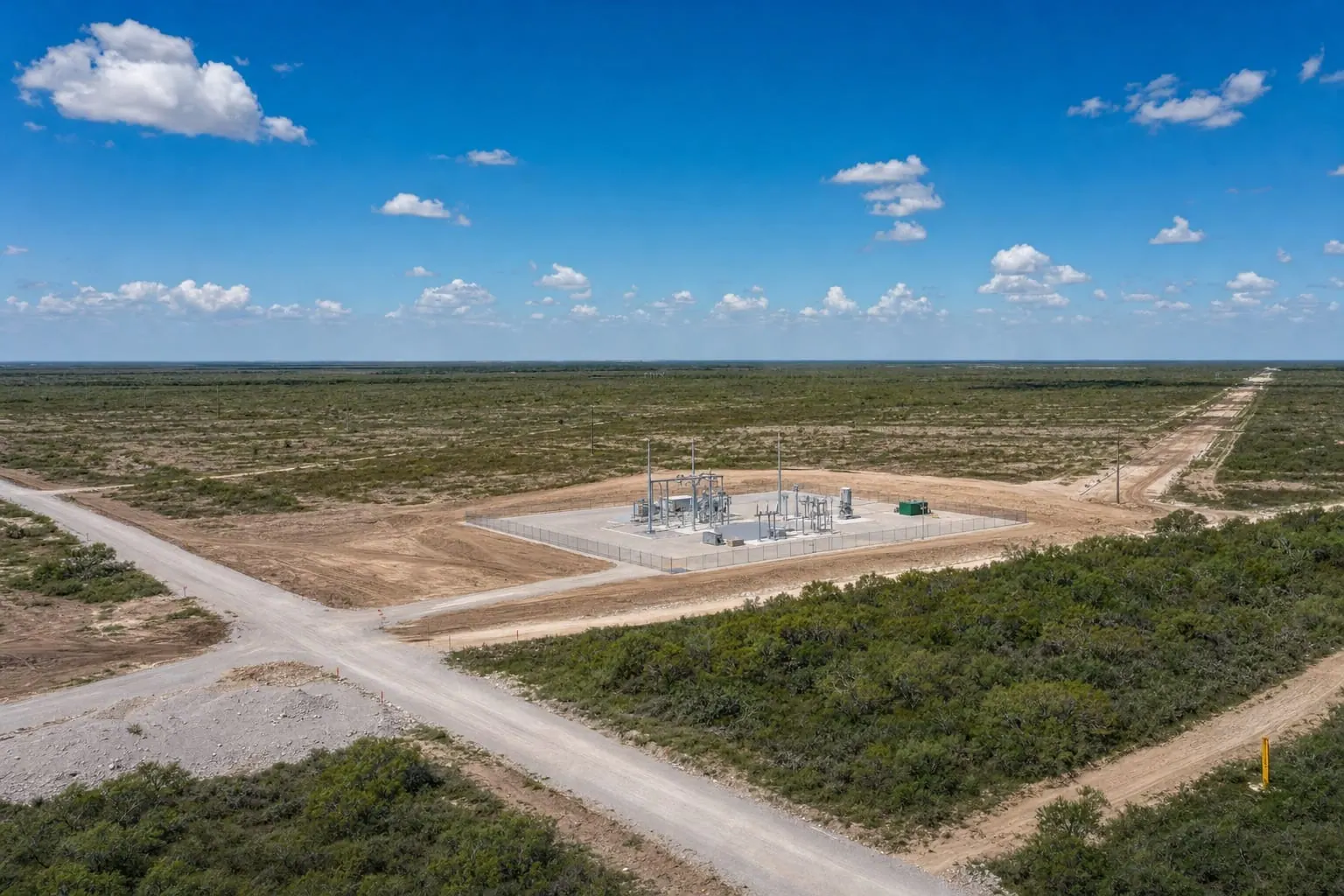
We are developing an AI campus with on-site gas generation and storage in South ERCOT, Texas, and a powered industrial site in Minnesota. In Vietnam, PacinfraX signed four site agreements with companies of BIN Corporation, with 1,200 MW planned, announced on . See each campus on our locations page, or read about our power infrastructure.
Photo: data center campus in South Texas
Questions
Questions from public partners
How does a data center campus benefit the local economy?
A campus brings capital investment, construction work, permanent technical jobs, local purchasing and a broader tax base. We plan hiring and procurement with each region.
Will the campus strain the local grid?
We plan power first with the utility. Some campuses run on on-site natural gas generation and battery storage; others, such as our Minnesota, powered industrial site, take utility power at the meter. Any new grid connection follows a schedule agreed with the utility.
How do you work with residents?
We brief the community before construction, name a local contact, and share regular updates through construction and into operations.
What does PacinfraX need from a permitting authority?
A single contact, early sight of the review process and clear requirements. We bring complete applications, one named lead and regular progress reports, so reviews run on a timeline both sides can plan around.
2 more questions
How do we start a conversation?
Write to [email protected] or use the government route on our contact page. Tell us about your region, available land and power, and your priorities for jobs and investment. Our team replies directly.
Where is PacinfraX working today?
We are developing an AI campus in South ERCOT, Texas, and a powered industrial site in Minnesota. In Vietnam, we have four sites with 1,200 MW planned.
Bring an AI campus to your region
Tell us about your region, your grid and your priorities. Our team replies directly. Partners in land and construction can also partner with us.